



Micro, Small, and Medium-sized Enterprises Day is an opportunity to raise awareness of the tremendous contributions these organisations make to society.
MSMEs account for 90% of businesses, 60 to 70% of employment and 50% of GDP worldwide. As the backbone of communities everywhere, they contribute to local and national economies, sustain livelihoods, support inclusive growth and combat inequalities.
Right now, these businesses need support more than ever as they continue to navigate rising costs, conflicts and the climate crisis. They are the hardest hit by these challenges, but also play a critical role in helping society build back stronger.
At Vodafone, we know the vital role these organisations play and are committed to helping them not simply survive, but thrive. Through digital opportunities we can support their ambitions, which is why we created V-Hub, a support platform for small and medium-sized businesses that offers access to digital expertise, one-to-one consultancy and an online knowledge centre.
Available in 14 markets across Europe and Africa, our V-Hub team stays on top of the latest tech trends and innovations, so you don’t have to. For MSME day, we’re sharing a short content series from the team behind V-Hub by Vodafone to help you and your business navigate the cost-of-living crisis.
Click below to explore more.

There are lots of small changes you can make to help your business adapt during tricky times.
Here, we share tips from the V-Hub team on how you can ensure your business remains fighting fit in a crisis.
Prioritise efficiency
Rising inflation means everything is pricier, so money simply doesn’t go as far as it did a year ago. It’s no surprise that consumers are cutting back on buying non-essential items. With less opportunities to make sales, businesses are looking for ways to become leaner and more efficient.
Automation can really help here, freeing valuable time to focus on activity that makes a real impact. Examples include adopting an online payments system that automates different parts of the buyer journey; reducing stacks of paperwork by switching to a HR solution that removes lots of admin; or improving stock replacement systems by automatically ordering more if a product is running low.
For example, we use our chatbot Tobi to help resolve customer queries and even HR and IT employee requests internally.
Add a personal touch
When it comes to adding the personal touch, small businesses do it best. Making the most of your business’ unique personality is a great way to set your business apart from larger competitors.
Again, technology is your friend here. Use social media channels and your website to really bring out your personality. Respond to customer queries or complaints speedily and with empathy, so they know you care about their needs. Reward repeat shoppers with tailored products or personalised deals that fit what they’ve bought before.
Building meaningful relationships with new and existing customers is something that more established businesses often struggle to do, so think about what your business can offer to really get to know and connect with your customers.
Check on your team
The cost-of-living crisis isn’t just about money; it’s also had a big impact on people’s wellbeing, with many businesses reporting higher rates of mental health decline among their teams.
This is a worrying trend for employers. After all, a happy and healthy workforce is a productive one.
Staying on top of how your team feels is important. There are many ways you can do this – ranging from training mental health first aiders with the internationally-recognised Mental Health First Aid (MHFA) International, to adopting digital HR systems that help track and support development conversations with managers.
Whichever way you go, make sure your team understand that you’re committed to helping them through difficult times, and are clear on where and how they can access additional support.
Proactive beats reactive
While these tips are useful in times of crisis, they’re valuable for the long-term, too. We can’t always predict the future, but by using technology to improve operations, reduce costs and support your team, you’ll be better placed to manage challenges down the line.

Have a brilliant business idea, but not sure if it’s the right time to get going? With rising costs and consumers watching their wallets, it can be intimidating to make major business decisions.
However, it could also be an incredible opportunity. Look at Airbnb, Groupon and Netflix – which were all formed in the recession of 2008.
Here’s a few things to consider before getting off the ground.
What’s your niche?
A good business idea on its own isn’t necessarily enough. It’s also crucial to think about your niche. What’s the gap in the market your product or service will fill? Is there a space where you can provide something no one else is offering?
Researching what similar, existing businesses are doing and working out how you can stand out from the crowd is key.
Research support options
Most European countries have schemes in place to encourage and support new businesses.
The European Commission provides a good summary of financial incentives available for entrepreneurs here.
It would also be worth investigating start up accelerators – programmes for early stage companies that offer support and access to expertise.
Freelance flexibility
As your business gets going, you will need to bring people on board to support with tasks you can’t do yourself, or where you need additional expertise.
If bringing employees on full-time isn’t an option, there is a diverse pool of freelancers in Europe worth exploring. Our UK team explains how using contractors could be the key to improving efficiency.
Additional resources
The V-Hub by Vodafone knowledge centre is packed with articles for businesses that are just starting out, with advice on social media, technology, security and more.
Need help now? For one-to-one support, speak to our V-Hub Digital Advisors who are always on-hand to chat through your questions.
For more getting started tips, take a look at how to unlock business growth with tips from serial entrepreneur, Stephen Bartlett, or how to protect your business from cost-of-living price increases.

These are turbulent economic times. Rising energy costs and price hikes across all consumer goods mean that customers and employees aren’t the only ones feeling the pinch—businesses are too.
Although many countries are set to introduce up to 90% cuts on energy tariffs this year, some organisations in at-risk industries like manufacturing, as well as small businesses, remain vulnerable to high bills, leading to potential job losses and even closures.
However, the good news is there are many ways you can effectively reduce your energy costs by leveraging smart technologies like the Internet of Things (IoT).
Here are four energy-saving strategies to help you efficiently reduce energy consumption and lower costs without hampering business performance.
1. Get smart with energy usage
By using IoT-enabled smart meters, businesses can quickly access insightful real-time data on their energy use across all locations, such as peak consumption periods, energy-intensive processes, and energy wastage risks.
Empowered with so much data, it’s far easier to implement energy management solutions relevant to your business priorities.
For example, we connected Magna, the global automotive supplier, to our energy management solution. The highly flexible and modular solution enabled Magna to successfully reduce energy consumption rates across all their plants by providing readouts and transfer of the meter readings using our IoT network.
2. Embrace energy-efficient lighting tech and habits
To create more energy-conscious lighting habits, you must first understand your lighting needs and any current usage anomalies that may be driving up your bills.
This is where energy management software and smart metering solutions come in. For example, intelligent lighting controls, like Philips Hue, allow you to optimise lighting usage based on occupancy and natural light availability.
Using motion sensor technology and automated dimming features, you can control whether lights are on or whether they are at the right brightness level according to working patterns and business needs.
3. Enjoy a saving on just one degree
Consider this—turning down the thermostat in your office by just 1°C can save up to 7% in heating costs.
It’s possible to save more than €70 from your annual energy bill for every degree you lower the thermostat. That’s a decent amount of money back, without disrupting working conditions too heavily.
For greater efficiency, let technology do the work for you. For example, Google’s Nest Learning Thermostat automatically adjusts your heating while enabling you to monitor your office in real-time.
4. Use an app to help
Unsurprisingly, office equipment is one of the biggest drains on business energy consumption. So, imagine having greater control over how and when you use it.
For example, prioritising printing or reminding employees to shut down their computers at the end of the day. The advantage of energy management applications is they are available 24/7, giving you immediate access to your account and balance.
In addition, you can perform a range of tasks, from monitoring your usage and bills, and analysing wastage to setting up tailored notifications relevant to your business.
TrueEnergy, an app which allows you to control over 600 appliances from your phone, is a good example. Apps like this are especially useful in periods when you’re not physically in the office but want to understand how energy is being used on site. They can even support electric vehicles.
Remember, the changes you make today can protect your business tomorrow
While these tips are helpful in times of crisis, they’re also valuable for the long term. If you use technology to improve operations, reduce costs, and support your team, you’ll be better placed to manage whatever challenges you and your business might face.

In times of crisis, it can be difficult to monitor and support the mental health of your team, particularly with many people now working more remotely or from home. But there are some digital tools that can provide assistance.
Mental health charity resources
Charities like Mind and Time to Change provide a wealth of free resources and information, from guidance on how to talk about mental health in the workplace, to downloadable tools to help you implement new policies.
Operating outside the UK? The Campaign Against Living Miserably has compiled a great list of international mental health charities here.
Mental health first aid training
Lots of people have a First Aid certificate. Mental health first aid certificates are perhaps less common, but a great thing to invest in.
At Vodafone, we’ve been delivering Mental Health First Aid training since 2019. We want everyone to be able to get support when they need it, and we understand the benefit provided by our network of volunteers from around the business. Equipped to recognise the signs of mental health issues, they know how to help and understand when professional help might be required.
We continue to assist our mental health first aiders with regular meetings and on-going collateral from our training provider. Mental Health First Aid International is a good place to start when looking for courses.
Employee wellness tools
Many businesses use Slack to send messages between employees. If you’re one of them, Kona is an add-on worth exploring. Think of it as a virtual ‘wellbeing officer’, which can check-in on staff and monitor for stress or burnout.
There are lots of similar tools for those who don’t use Slack, such as Modern Health and Lyra. These provide personalised support in several areas of mental health, from therapy to medication management.
And remember that there are many mobile apps focused on wellness, such as Calm, Talkspace or Headspace. Business plans are available which would give employees a flexible way to manage their own mental health.
Get talking!
Mental health shouldn’t be a taboo subject. If you embed it into your company’s culture and values, all employees will know it’s important, and something they can talk about freely. Be clear that you care, and will help with support and tools if they need them.
A mental health toolkit is a great place to start. At Vodafone we host events and webinars during awareness days throughout the year to remind our teams of the importance of mental health.

Even though the latest economic forecasts indicate the European Union (EU) economy is poised to avoid a recession in 2023, the underlying message remains—expect persistent headwinds.
So, businesses must act now to future-proof their operations. If you want to make an immediate impact, your technology stack is a crucial area to review.
By leveraging new technologies, you can drive impressive operational efficiencies while ensuring your organisation maintains a competitive edge in what is a constantly changeable economic climate.
Let’s explore four ways technology can support business growth during these uncertain times.
1. Unleash the power of the cloud
Cloud technology is a must-have for organisations aiming to thrive in the digital era.
Whether it's seizing new opportunities, making informed decisions or empowering teams to reach peak performance, cloud technology offers a range of advantages. Moreover, it allows businesses to gather, store and analyse a wealth of valuable data at scale.
For example, a cloud-based solution like Vodafone Analytics uses Big Data to gather and analyse telecommunications information based on user geolocation and behaviours. As a result, your sales and marketing teams can better meet customers’ expectations by understanding their needs and make savings by delivering targeted metric-based campaigns.
2. Transition your business online
Hybrid and remote working are here to stay. According to a survey by the Chartered Institute of Management (CMI), 80% of businesses have shifted to hybrid working since the start of the pandemic. Moreover, reducing the amount of physical office space can help companies to lower overhead costs and boost productivity.
Cloud-based platforms like WhatsApp, Slack, and Microsoft Teams enable employees to communicate instantly, support greater collaboration and free your people to engage with higher-value work.
The advantages of the hybrid model go even further. All these solutions offer a new level of flexibility by reducing commuting times, thereby boosting productivity and helping businesses recruit from a global talent pool.
For example, our Vodafone Business UC with Ring Central solution offers flexibility on features and subscriptions. But also seamlessly integrates with your existing infrastructure and current cloud applications, making it easy to tailor to your specific needs and preferences. So no more struggling with tools that won’t speak to each other.
3. Boost your sales success with social media
If you want to connect with customers, build brand awareness and credibility and nurture your sales funnel, you must be on social media. But, with so many different channels available, it can feel confusing.
Start by setting set goals. For instance, your focus may be to generate new leads, increase sales, grow revenue, or build a community around your business or products. Next, identify your audience and where you can find them—are they Instagram scrollers or active Reddit contributors?
For example, the social media app TikTok is great if you want to reach Generation Z and Millennials. A recent survey discovered 77% of European users reported discovering small businesses on TikTok before seeing them elsewhere. If, on the other hand, you’re interested in B2B marketing, then a channel like LinkedIn should be your first choice.
Lastly, review what your competitors are doing online.
4. Unlock efficiency and savings with HR Tech
The truth is, when done manually, HR processes like payroll are immensely time-consuming and tedious. To address this, HR software like HiBob and Sage HR can help you automate a range of workflows such as new hire onboarding, document management and employee communications.
What's more, HR technology can significantly reduce staff workloads, help attract better talent, and improve the employee experience leading to lower turnover rates.
For example, Spanish HR start-up Vidahora found a 40% reduction in time spent on repetitive administrative tasks by HR teams using an AI assistant in their tech stack. In addition, employees also reported improved happiness and well-being levels.

In today’s interconnected digital landscape, no business or brand is immune to the perils of cyber-attacks and data breaches. The risk to businesses spans from operational disruption or reputational damage to financial loss or even closure.
According to IBM, the average cost of ransomware attacks in 2022 reached an eye-watering $4.54m.
And it’s not just a concern for large corporations. In Accenture’s Cost of Cybercrime Report, 43% of cyber-attacks target at SMEs. Worryingly, only 14% are capable of defending themselves.
Building a culture of organisational resilience should be a priority for all types of companies. Due to the unpredictability of attacks, it’s imperative that businesses keep pace with the threat landscape.
The case for increased cybersecurity
In the post-Covid era, cyber risks have grown in frequency and sophistication. Global attacks increased by 38% in 2022, with North America, Latin America and Europe experiencing the highest rates. Put another way, hackers attack every three seconds. That’s 26,000 times daily.
One reason behind the sudden increase in cybercrime has been the shift towards remote working. In contrast to the traditional office workspace, where you have sophisticated technologies working to secure IT equipment like desktops and a corporate local area network, home networks are far more vulnerable.
Hence, why it’s essential to use a software-defined network. This way, businesses can guarantee connectivity and ensure their employees have safe network access from anywhere. By using solutions like SD-WAN, companies can direct traffic and automatically assign requests to a particular path based on bandwidth availability. What’s more, it’s highly customisable.
For example, if you needed to create a new connection — for those higher bandwidth tasks — you could create a segmented route, enabling those business-critical requests to bypass the higher volume activity and reduce latency.
Many businesses have moved towards a bring-your-own-device model to ensure 24/7 access to business data from anywhere. For instance, employees can access various professional and personal applications on their work-related devices. This has increased unnecessary access, with some employees staying logged into applications they last used months ago, creating ample opportunities for cybercriminals to exploit.
With a Virtual Private Network, your employees can connect to the corporate network wherever they are. And any data they send is automatically encrypted.
So, when implementing multi-factor authentication, best practice advises conducting regular updates and using rate limiting to prioritise employees that need higher bandwidth. Consequently, this also supports a safer network for everyone.
Future proof against social engineering attacks
If you’ve ever been manipulated into downloading an app or opening a website, this probably resulted from a social engineering attack. Over 75% of targeted cyberattacks start with an email, making phishing one of the top causes of data breaches, followed by stolen credentials and ransomware.
To keep your business safe and mitigate against social engineering, Vodafone’s Lookout Mobile Security protects businesses from malicious apps that seek to steal sensitive data and sends alerts warning users of unencrypted networks, operating system vulnerabilities and phishing attempts from browsers, email and SMS.
Invest in device safety
Today, there are 14 billion connected devices, and that figure is projected to nearly double in the next five years. Choosing devices and systems that are easy for employees to use is essential to clear confusion and eliminate the need for people to download external server add-ons.
Also, regularly updating them against the latest threats is vital to protect your business from mobile malware and data theft.
For example, Vodafone Secure Net protects against viruses, malware and phishing when you and your employees browse the internet, use apps, download files or email your mobile devices.
Romania
More stories

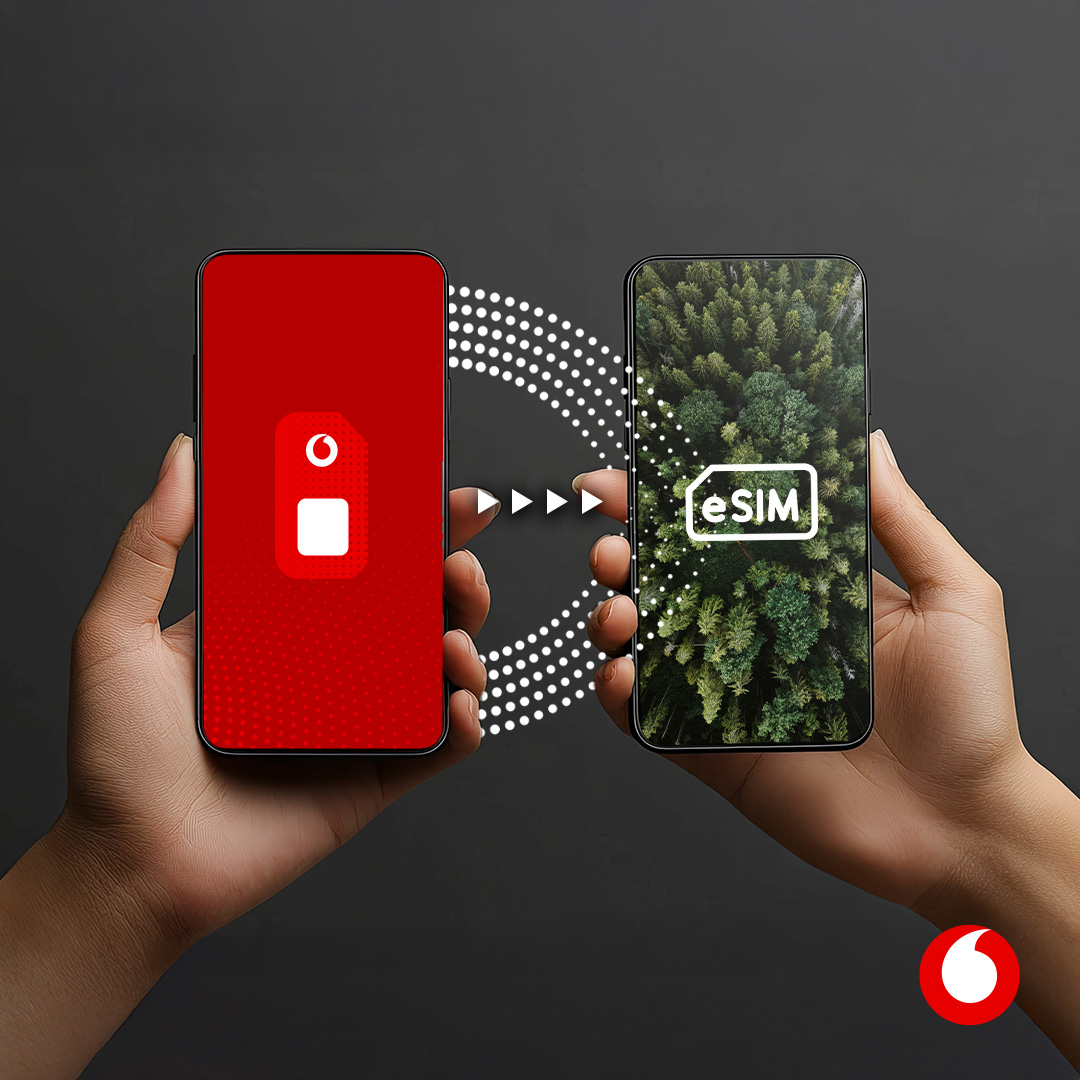
Vodafone and Google partner to launch eSIM transfer experience for Google Pixel 9a smartphone
3 minute read
