- Only 1 in 4 (26%) rate good or high on new digital wellbeing index
- Almost half (45%) worry about missing out when offline
- 1 in 6 (17%) UK teens say they are online for more than 8 hours during weekends
10 February 2026 – On Safer Internet Day, a new report published by Vodafone Foundation and Save the Children has found a significant minority of teens across nine European nations report challenges with their digital lives and self-regulating online, despite strong online safety skills driven by education and awareness campaigns.
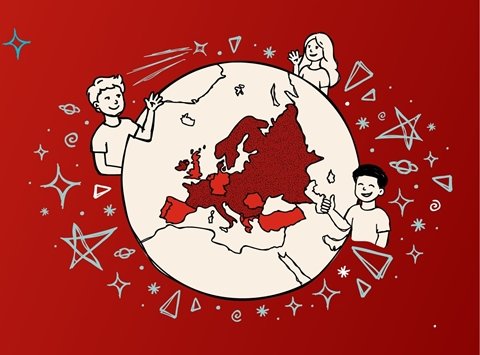
Connected Childhood: The State of Digital Wellbeing & Resilience for Children and Young People in Europe surveyed over 7,500 13–18-year-olds across nine European countries using a new Digital Wellbeing and Resilience Index. It presents a mixed snapshot of digital wellbeing and resilience amongst young Europeans in Albania, Greece, Germany, the Netherlands, Portugal, Romania, Spain, Türkiye and the United Kingdom
Three in ten young people (30%) report frequent stress from being online, and nearly half (45%) worry about missing out when offline. This highlights emerging pressures that may affect wellbeing over time.
As a result of these findings, the two organisations are calling for online platforms to make their services safer by design, including implementing more effective content moderation for underage children, preventing addictive features, and enforcing strong anti-exploitation measures.
Young people are more connected than ever – with 95% online for at least an hour every day (on average across the nine nations) and most (83%) with their own smartphone – and the report found that for some this presents challenges:
- Just over one in four young people (26%) have strong digital wellbeing on the Index. Most (64%) fall into a moderate range (averaging 5 to 6 out of 10), suggesting many are managing their digital lives but not fully thriving, while one in ten (10%) score as low on digital wellbeing.
- Three in 10 young people (30%) reported being online often leaves them stressed or upset, 4 in 10 (41%) worry about experiencing cyberbullying, and almost 6 in 10 (58%) reported often being distracted by notifications when they should be focusing.
- Half are staying online longer than planned because they are enjoying it so much they don’t want to stop (51%).
- 1 in 4 (24%) also cite FOMO (fear of missing out) as a reason for staying online longer than they planned, and almost half (45% on average) worry about missing out when offline.
- Only a third of young people (34% on average across the nations) score good or high (at least 7 out of 10) on the self-management index for their online use, and while around half (49%) score at least moderately well, 1 in 6 (17%) scores low.
- Just over half of young people (55% on average across the nations) score highly on the digital literacy index, which may be due to technology outpacing digital literacy for some. Around two-thirds say they can understand algorithms (65%) or can identify AI-generated or edited content (63%).
- UK teens spend the most time online, especially on weekends. Around 1 in 7 (14%) are online for more than 8 hours on weekdays, rising to 1 in 6 during weekends (17%), compared to the nine-nation average of 7% and 12% respectively.
Joakim Reiter, Chief External & Corporate Affairs Officer of Vodafone Group and Trustee of Vodafone Foundation said: “Teens are telling us something important - it's not just social pressure keeping them online - it’s the way apps are built. Doom-scrolling, autoplay and hyper‑targeted feeds are designed to keep them hooked.
“Across Europe, the Skills Upload Jr programme driven by Vodafone Foundation and Save the Children is already supporting millions of young people, giving them the tools to be more resilient online. But it’s time for online platforms to take real responsibility and put young people’s safety and wellbeing first.”
Uju Aderemi, Director of Partnerships for Impact at Save the Children said: “Children have the right not only to be safe online, but to truly thrive there. This Index shows that while young people across Europe are more connected than ever and often find real joy and opportunity online, too many are also experiencing stress, disrupted sleep, and the pressures of an always-on digital world.
“It is a powerful reminder that access alone is not enough. We must equip children with the skills, confidence, and support they need to navigate digital spaces in ways that protect their wellbeing and enable them to flourish. By holding platforms to account, embedding digital wellbeing into education, and meaningfully listening to children and young people, especially those facing additional barriers, we can help create online environments that empower rather than harm. In a connected world, no child should be left behind.”
Young people show strong online empathy
Despite the challenges identified, the Connected Childhood report also found that digital spaces can be places of connection and growth for a generation that has grown up online.
The majority of young people scored strongly on the online empathy index (61%), but only half (54%) agreed or strongly agreed they belonged in at least one supportive online community. In particular, two-thirds (66%) of young people scored highly on the identity and relationships index measuring how comfortable and supported they feel online.
Wide variations in digital wellbeing and resilience across the European nations
Connected Childhood found there are major differences depending on where teens live, suggesting that digital wellbeing and resilience is also shaped by domestic policies, education and wider structural factors.
Notably, 82% of young Romanians scored ‘good’ or ‘high’ on the overall Digital Wellbeing and Resilience Index, combining all the aspects asked about (against an average across the nine nations of 72%). Albania and Türkiye also performed well on multiple aspects, scoring highly on the online empathy and on the identity and relationship domains.
The UK was in line with the nine-nation average on many aspects; 3 in 10 (29%) scored good or high on the digital wellbeing indicator (the nine-nation average was 26%) and 7 in 10 (71%) scored good or high on the overall Digital Wellbeing and Resilience Index.
But UK teens are among the heaviest internet users across these nations, especially on weekends, and on self-management they are below most nations, with 21% scoring low on the self-management index (the average was 17%).
Vulnerable groups most at risk
There were consistently lower scores reported by children and young people experiencing food insecurity, regular anxiety or depression, or who have disabilities or functional difficulties, and on the digital wellbeing indicator for those who identify as non-heterosexual.
This highlighted the importance of embedding knowledge into education systems, working alongside teachers, educators and parents / carers to help them shape healthier norms around digital balance.
Notes to Editors
Connected Childhood Digital Wellbeing & Resilience Index
Connected Childhood’s Digital Wellbeing and Resilience Index (DWRI) measures multiple dimensions of children and young people’s digital lives to create a composite indicator giving a holistic picture of their online experience.
This report then applies a child rights and public health lens to the findings so responsibility for the agenda-setting recommendations sits with Save the Children and Vodafone Foundation.
The DWRI 2025 survey was conducted by Ipsos during December 2025 – January 2026, surveying 7,755 children and young people aged 13-18 across nine countries (Albania, Greece, Germany, the Netherlands, Portugal, Romania, Spain, Türkiye and the United Kingdom).
It asked about seven aspects of digital activity and impacts: the five domains of the core Index (Security and Safety, Management, Identity and Relationships, Digital Literacy, and Empathy and Protection) and two indicators of Engagement and Digital Wellbeing. Scores are calculated from combined responses, converted to a percentage of the total and banded as low, medium, good or high to indicate how fully the aspect is achieved.
Vodafone Foundation and Save the Children partnership
In February 2025, Vodafone Foundation and Save the Children announced a groundbreaking partnership to launch a new Europe-wide digital skills and resilience training programme for children aged 9 to 16.
The collaboration is focused on upskilling children beyond digital skills, with bespoke content addressing online safety, digital rights, and ethical online behaviour.
By integrating these important elements into educational systems worldwide, both are helping to shape a healthier, safer digital landscape for young people today, while positively impacting their lives tomorrow.
Bespoke educational content combines Vodafone Foundation’s successful approach to driving inclusion through digital learning with Save the Children’s expertise in child protection, wellbeing and children’s rights.
The training is being integrated into Vodafone Foundation’s ‘Skills Upload Junior’, a Europe wide digital skills education programme that has reached over 10 million children in the last five years.
About Vodafone Foundation
Vodafone Foundation (UK registered charity number 1193984) harnesses the power of connectivity to drive social good. Since 1991, it has invested in communities by connecting people and ideas with technology and funding, delivering impactful change alongside partners worldwide.
About Save the Children
Save the Children works in over 100 countries, fighting for kids’ rights and wellbeing. For a century, Save the Children has made sure children stay safe, healthy, and learning, and that their voices are heard.
For more information, visit www.vodafonefoundation.org and www.savethechildren.org.uk
Technical notes on the research
The DWRI 2025 survey was developed by Save the Children and Vodafone Foundation from its Index. It explored young people’s digital access, use, experiences and impacts.
As part of its partnership with Vodafone Foundation, Save the Children commissioned Ipsos in the UK, a market research agency, to carry out a representative survey of 13-18 year-olds in nine European countries: Albania, Greece, Germany, the Netherlands, Portugal, Romania, Spain, Türkiye and the United Kingdom.
The DWRI 2025 survey was conducted by Ipsos during December 2025 – January 2026, with 7,755 children and young people aged 13-18 across nine countries. In Albania the survey was conducted face-to-face, including young people regardless of whether their household was online or not. In the other nations, the survey was conducted online only with young people in households already participating in the online panel.
The core DWRI index measures five domains of safety, management, identity and relationships, digital literacy, and empathy and protection and is supplemented with two indicators of digital wellbeing and enablement (access). Scores are calculated by allocating points for responses, summing these across all items and converting this total to a percentage of the maximum possible score. Percentage scores are banded as low, medium, good or high to indicate how fully the index or indicator is being achieved.
For example, on the finding about digital wellbeing: Just over 1 in 4 scored good or high on digital wellbeing (26% on average across the nations scored 7 or more out of 10 on this indicator). While most scored moderately (64% scored 5 or 6), 1 in 10 young people scored low (10% scored under 5 out of 10).
Data are weighted within each country by age, gender and region. Unless specified as national, figures are the average across the nine nations. All polls are subject to a wide range of potential sources of error. The findings report associations identified in the data, but do not show causal links and cannot be used to infer causation.
About Ipsos
Ipsos is one of the world's leading market research companies, operating in 90 countries. Ipsos in the UK delivers reliable information and a true understanding of society, markets, and people, providing clients with the confidence to make important decisions. For more information, visit www.ipsos.com/en-uk
More stories
m-mama reaches 250,000 lifesaving emergency transports for pregnant women and newborns
0 minute read