



At Vodafone, there are women doing some remarkable things with technology. This International Women’s Day we want to celebrate their achievements.
From using generative AI to improve the customer experience, to delivering a new mobile network in Ethiopia and using IoT to tackle the human-wildlife conflict, discover their stories below.
Click below to explore their stories.
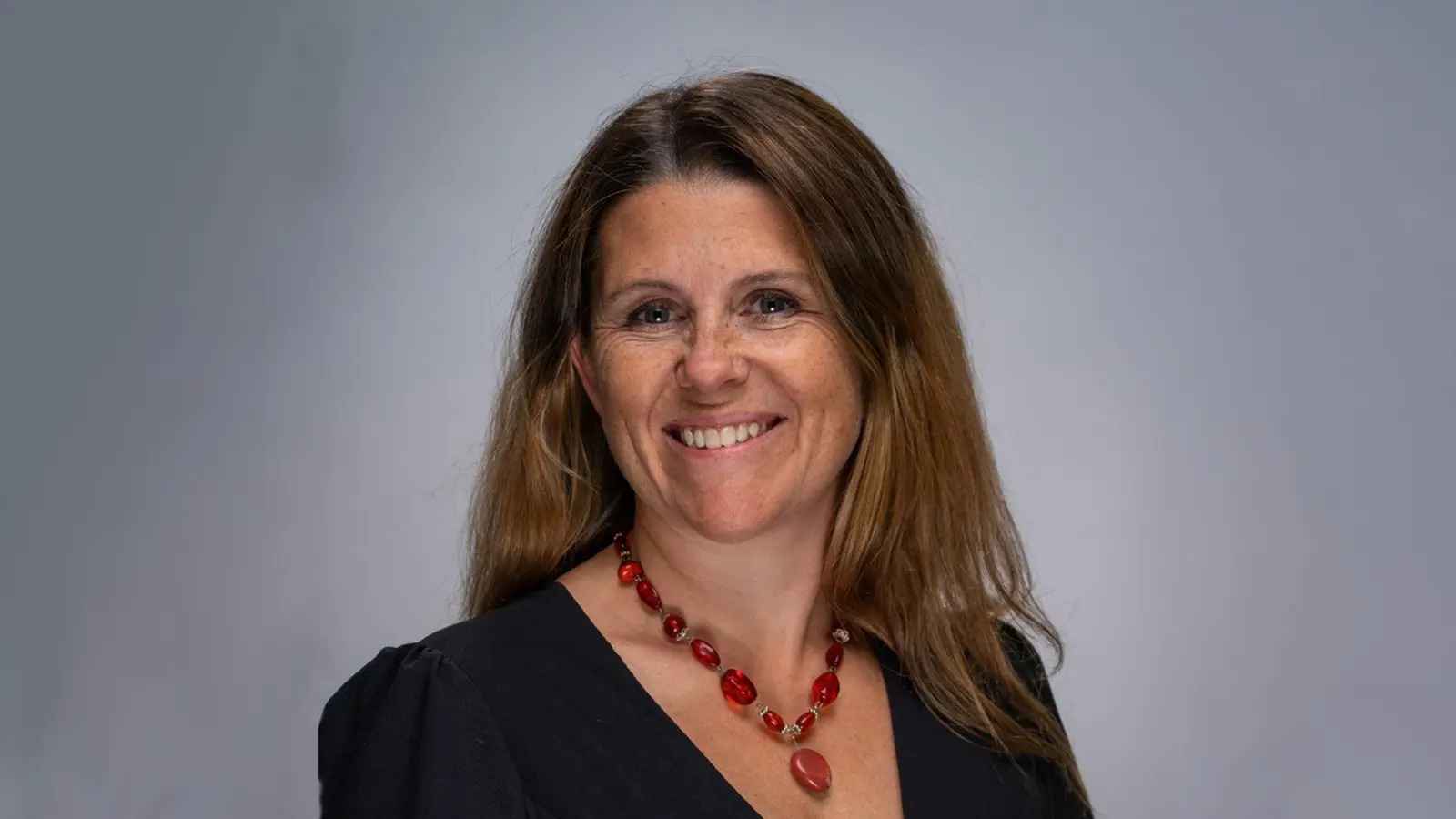
Generative AI is a buzzword in tech right now. Even those outside of the industry are intrigued by its potential. For Beverley Bartlett, Head of Digital Care at Vodafone, the technology's ability to transform how companies interact with their customers is what excites her most about her role.
“It’s an exciting job to have,” says Beverley. “Chatbots were in the shade, but I think generative AI has brought them under the spotlight. Suddenly everybody wants chatbots everywhere.”
Reinvigorating the chatbot
This wasn’t always the case. Back in 2015, when Beverley was working in banking, the focus was on websites and apps.
“At the time, there was a lot of hesitancy to introduce chatbots because there weren’t many great examples and marketing was positioned around great service from a real person. As a consequence, we faced a lot of funding challenges,” Beverley explains.
But she saw the potential of this technology if it was shaped properly. That’s when she began building a chatbot-based app for mortgage customers.
At first, she didn’t have any expertise in user experience or app building, and had to learn these skills on the job. But she did have 20 years of customer experience.
“I understand language and people, that’s my strength in an IT environment. I understand customer interactions and how to shape these experiences to be more human like. Back then, chatbots were being built with tech driven ambitions first. So they served a function, but didn't give the experience customers truly wanted and needed,” says Beverley.
Now, with the help of generative AI, Beverley believes we can make these experiences even better.
“We've become trained as users to use keywords to search for things, whereas now we want customers to ask questions as if they were talking to a person because it allows the bot to understand more context and get more accurate information,” she says.
Testing with TOBi
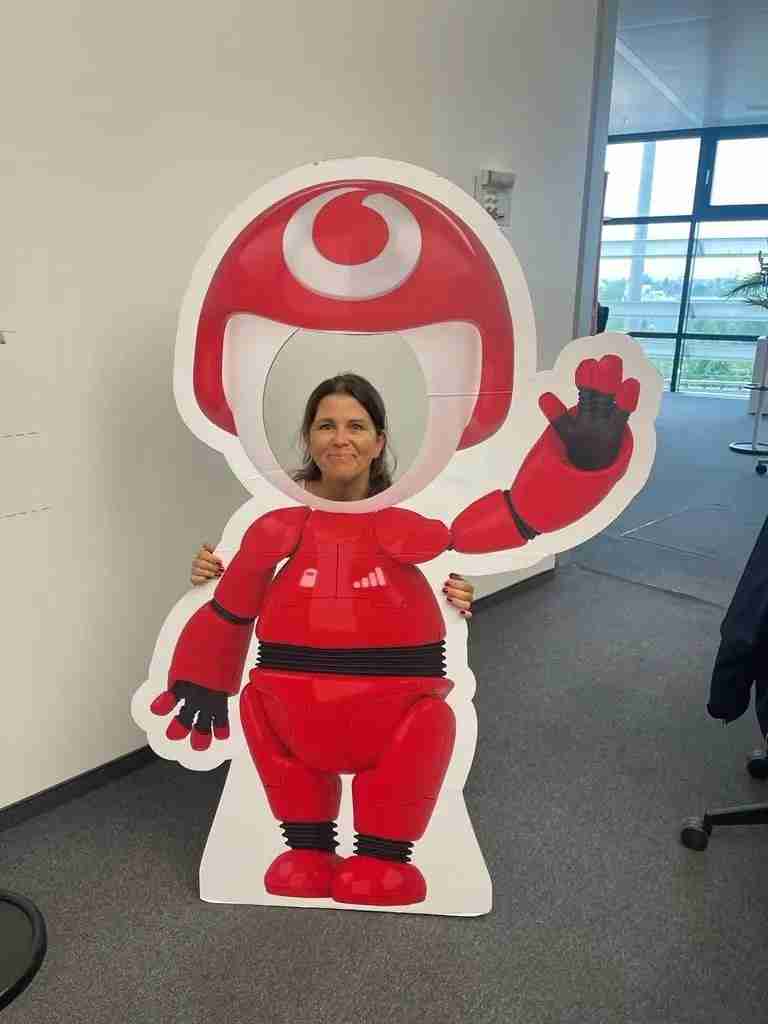
Looking at Vodafone’s digital assistant TOBi, Beverley and her team are testing new use cases in Europe.
The first looks at scheduling appointments for installations and repairs. In the past, talking to a bot to arrange an appointment could be quite a linear process. With generative AI you can tell the bot to collect certain information, like customer name and location, convenient dates, times, and what it is they want fixed.
“This speeds up the process and takes away friction points, allowing the customer to have a more human-like experience,” says Beverley.
The second use case is around billing. Capable of answering how much a customer has paid and what offers are available to them, generative AI can handle the entire experience.
“If we come back to the premise of bots – they were always supposed to do basic tasks. Simple questions, with simple answers. But over time, customers started to ask all sorts of things. Generative AI allows bots to be more complex and that’s where it gets interesting,” explains Beverley.
This doesn’t mean we’ll roll it out everywhere. In simple digital journeys like ordering a new SIM, Beverley believes generative AI would be overkill.
She also tells us that the foundations of a good conversational experience don't change. Technology just allows us to do it differently.
It’s a long way from Yorkshire
Beverley’s first job couldn’t have been further from the digital world. “I did potato and bean picking in Yorkshire,” she recalls. “It was hard work for not much money, but it got me out of the house.”
After studying at university, she went into retail banking where she had a long and successful career but upon her return, after her third child, she was made redundant.
“I was devastated at the time, but now I look back and think thank goodness that happened because it allowed me to spend time with my kids,” explains Beverley.
Talking about the difficulties of balancing her career as a mother, she goes on to say that the point at which your career becomes more consuming often coincides with when your children are teenagers, and they still need a lot of your time, care and support.
“It’s a topic we often discuss in Women in Digital meet ups, one of Vodafone’s women’s networks,” she says.
Clearly not one to be beaten, London Marathon runner Beverley decided it was time for a career change and completed a master’s degree in business administration. Her dissertation was on the impact of technology when it mediates interactions with customers, which is what lead her to her role at Vodafone.
“It was a gift to get this job,” says Beverley, while also noting the hard work that got her to this point. “It’s been an adventure so far. A lot now lies ahead with generative AI so it’s a really exciting time.”
Beyond the bot
When asked about the future of digital assistants, Beverley tells us, “There are lots of innovations both in and outside of Vodafone. Last year, the team in Germany built an augmented reality version of TOBi that attracted lots of interest, but first and foremost a chatbot must be effective at resolving customer issues. Whilst I see potential for avatars or physical representations of TOBi in stores, there’s no clear value add in the digital channels were most interactions take place today.”
Where she does see value, is giving bots more personality. Something that has been a long-standing challenge.
“One of the best and earliest chatbots I’ve seen that was successful at this was Rose, a virtual assistant for a Las Vegas hotel. It helped customers navigate what was on each floor and had lots of value attributes, as well as being super cheeky and a bit risqué,” says Beverley.
“It’s much harder for a telco or bank to achieve this but with generative AI, we can give bots characteristics to suit our customers and their interactions. For example, you can tell the prompt in generative AI, when responding to this type of question, to display the characteristics of A, B and C, giving more tailored responses. So, chatting with a bot should become much more fun.”
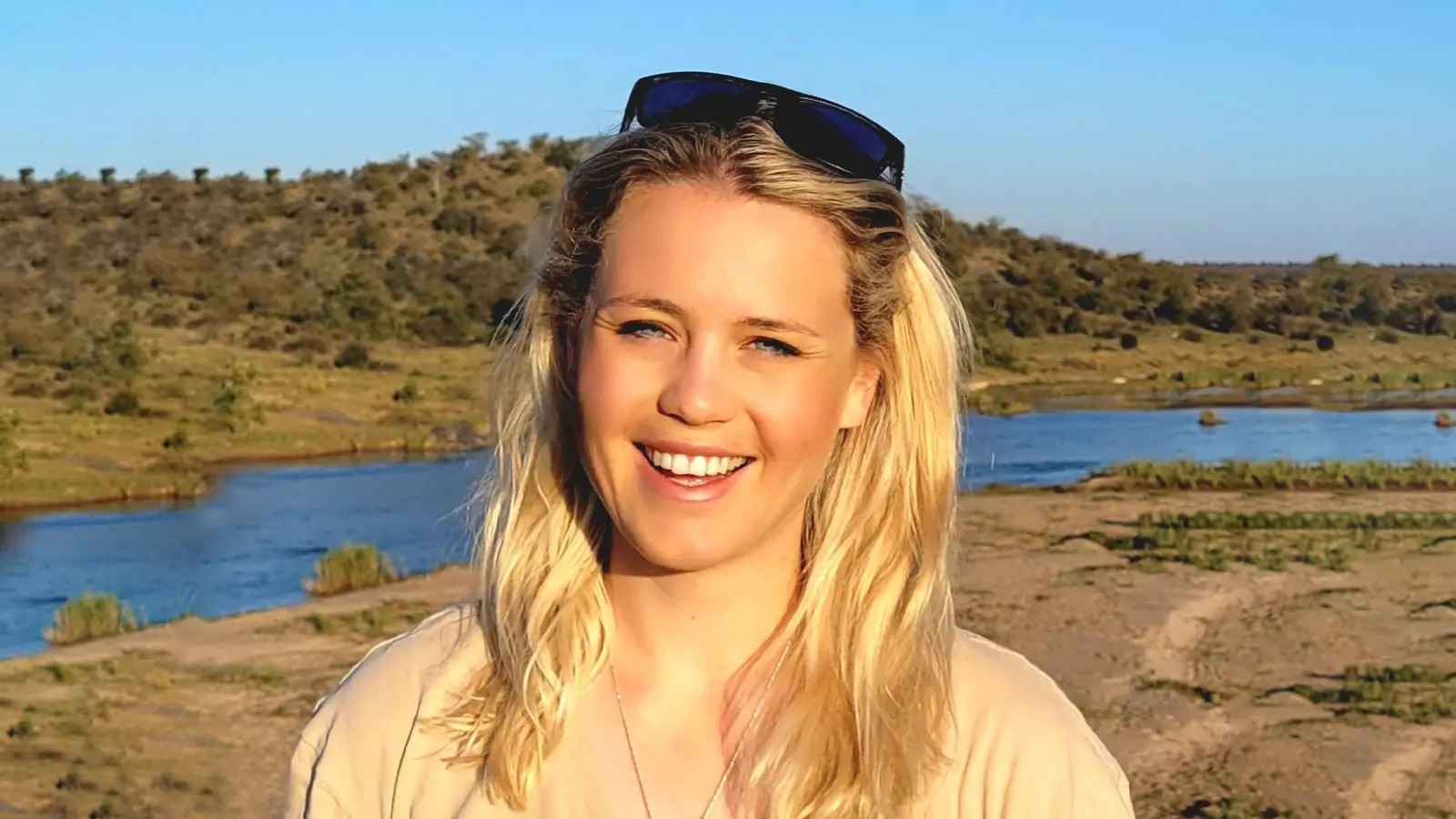
Just three short years into her career at Vodafone, Amy Turner is already making a big impact. Working her way up the ranks, she currently manages a team of 13 people while also co-leading on a huge technology project aimed at mitigating the human-wildlife conflict.
“The most enjoyment I get is from working with the team to overcome all the challenges that are thrown at us on a daily basis,” says Amy.
“I also feel very lucky that I’ve been able to bring my external passion for wildlife to work, through m-Twiga.”
Diving into wildlife solutions
m-Twiga, Amy’s brainchild, is a solution Vodafone is developing to help rural communities and wildlife co-exist. In some parts of the world, when their habitats overlap, humans and animals have to compete for resources. Which can lead to negative consequences such as loss of property, livelihoods or even life itself.
“When I joined Vodafone, I was becoming very aware of the human-wildlife conflict as an emerging threat to species such as elephants and lions. Ever since I joined, I thought there must be something in our IoT portfolio we can leverage to solve what WWF describes as one of the biggest threats to biodiversity,” Amy recalls.
“I’ve always been fascinated by wildlife. It started on the marine side as I’m an avid diver. I’ve been diving all over the world and around five years ago I started getting into conservation, specifically in Africa. I fell in love with the continent, the people, the stories, the wildlife and the landscapes.”
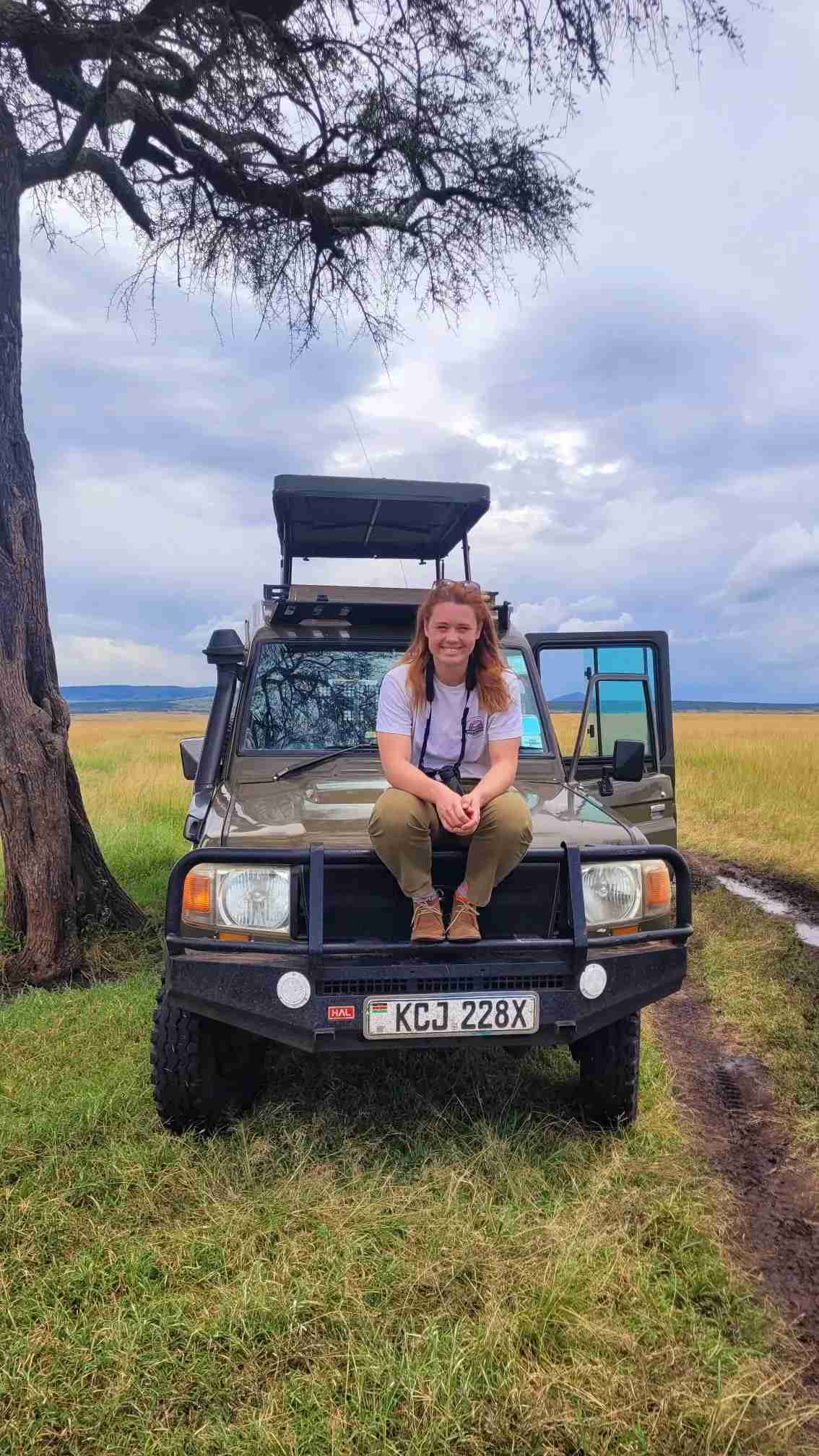
Starting a podcast called This Wild Life Conservation in 2020, Amy has had the privilege of speaking to a range of conservationists, from wildlife vets, to specialist helicopter pilots, marine biologists, and anti-poaching rangers.
Sharing their stories from the frontline, the human-wildlife conflict was often mentioned and she tells us how she couldn’t help but be inspired to try and use technology to help humans and wildlife co-exist.
Then, in 2022, she saw an opportunity to enter her idea for an AI alert and deterrent solution into an internal innovation programme. The idea, aimed at preventing predation of livestock and deterring elephants from causing infrastructure and crop damage, was selected as a winner.
Receiving funding to get the project off the ground, she quickly joined forces with Joe Griffin, Senior Sustainability Manager at Vodafone, who saw the potential in her idea. They now co-lead the project together.
Through Amy’s existing conservation network, the skill of Vodafone’s tech team in Newbury and Joe’s energy and experience within sustainability, they’ve made it happen.
Taking the tech to Kenya
In January 2023, Joe, Amy and the tech team, were able to test the technology for the first time. Capturing footage of lions, hyenas and wolves at Longleat Safari Park, UK, they were able to calibrate the AI and assess how well the solution could recognise each species and send alerts.
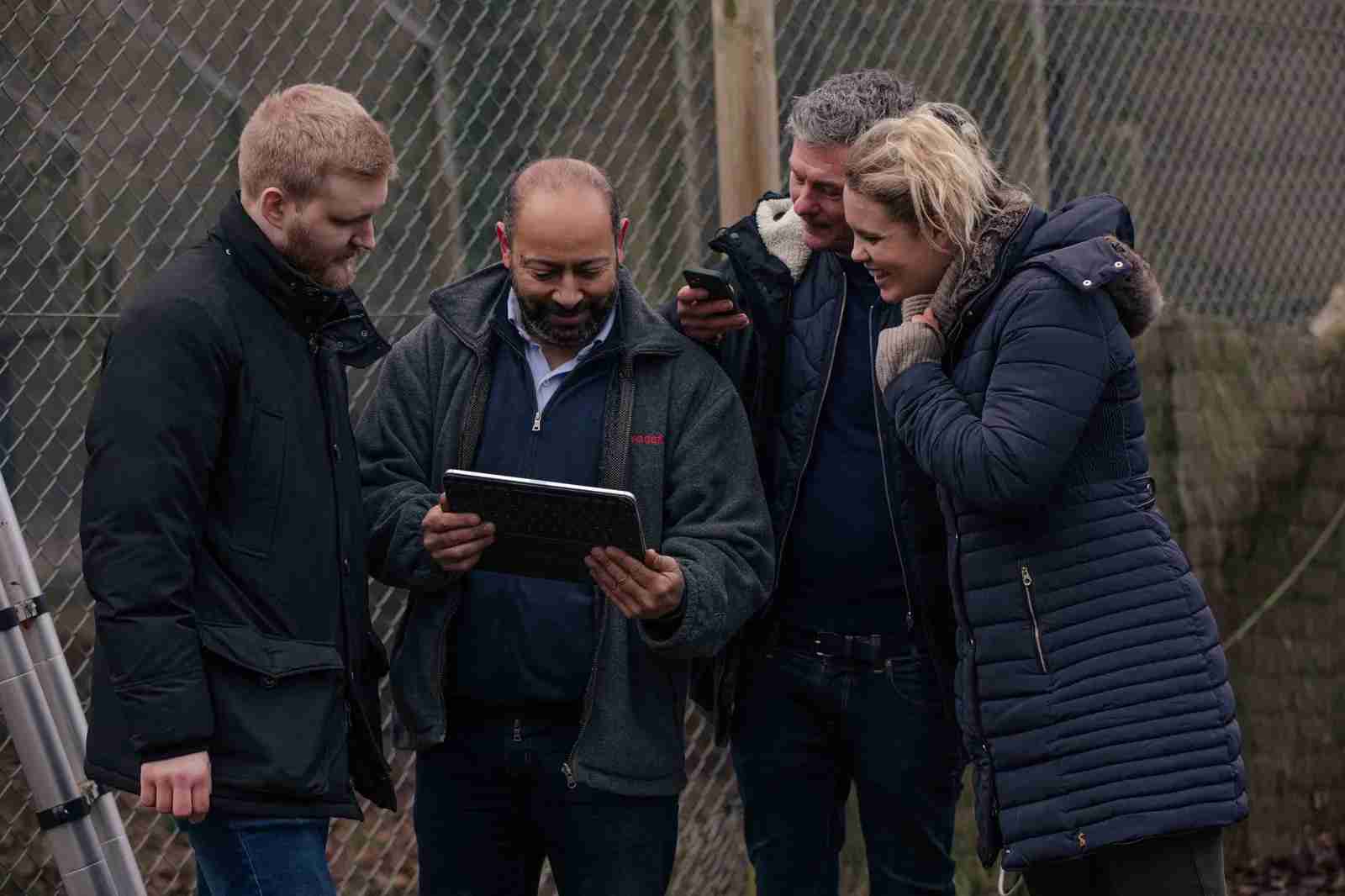
Fast forward a year, and the team is now taking the solution to Kenya for further testing and AI development.
“I'd say the logistics for this test phase have been challenging. We’re out in the field, in the Masai Mara. It’s a really wild place. We’re staying in a camp which has no fences, amongst the wildlife. It's very exciting to get two m-Twiga prototypes into the environment they’ve been built for. It feels like we’re introducing them to their natural habitat for the first time,” says Amy.
“I’m hopeful we'll come back with everything we need to further improve the AI model and understand how the hardware and software performs in a field environment.”
Involved in every aspect of the project, Amy does admit it’s been challenging at times, but she’s seen first-hand the impact this technology could have.
Not just in Africa, but in other parts of the world facing human-wildlife conflict. Whether that’s protecting wolves in Sweden, bears in Canada or tigers in India. The potential to change lives of humans and wildlife is enormous.
Going for Gold
Problem solving doesn’t faze Amy. In her day job at Vodafone, she works in the Business Care, Billing and Collections function in Vodafone Business UK led by Richard Maynard.
“The job requires constant problem solving so the team can continue to support business growth, whilst ensuring the operational teams and frontline are primed for key deliveries such as flagship product launches – I really enjoy the relentlessly fast-paced nature of our work,” says Amy.
“My operational experience has helped pushed m-Twiga forward, and equally I apply the learnings from developing m-Twiga into my day role. I’m also extremely thankful to be supported by my manager, Szilvia Pricopi Karim who’s always supported us to take opportunities to learn and improve.”
And Amy isn’t one to shy away from new experiences.
Back in 2014, she took up Sprint Kayaking during her first year of university as part of the National Girls4Gold talent identification programme, she then joined the Olympic Development programme and quickly went on to represent Great Britain internationally.
“I ended up racing at multiple World Championships, European Championships, World Cups. It really was a very unique experience with huge highs and lows,” she says of the experience.
So why the change to work in tech?
“I felt like I had gotten everything that I wanted out of the sport,” Amy explains. “I was excited for a new chapter.”
That’s when she applied for the graduate programme at Vodafone.
“Getting onto the graduate scheme was a massive achievement and something that I was so proud of,” she beams. “It has opened so many doors for me.”
Naturally, Amy got stuck in straight away, co-founding Vodafone's Global Youth Network alongside Ishmael Bawumia and Emma Halmshaw, bringing together graduates from across the business, as well as being part of the United Nations SDG Young Innovators programme.
“I think that was the first time that I'd been able to really explore my passion for the SDGs and technology alongside my role at Vodafone,” says Amy.
So, what’s next for this highflyer?
“I’m really driven to continuously improve and gain experience. Being relatively new to my current role I’m motivated by how we, as a team, can find ways to maximise our potential and further support the business,” she says.
“As for m-Twiga, the increasing urgency to help reduce conflict between humans and wildlife is what drives this project forward. Our next milestone will be to deploy m-Twiga in rural communities as part of a community pilot phase.”

In May 2021, the Global Partnership for Ethiopia, comprising of Safaricom Plc, Vodafone Group, Vodacom Group, Sumitomo Corporation and British International Investment, was awarded a license to operate telecom services in Ethiopia.
Almost two years on and the network has launched, with 2G, 3G and 4G mobile services available in 11 regions, and Fitsum Gorfe, Site Acquisition Team Lead at Safaricom Ethiopia, is part of that story.
“So far, my team and I have acquired 1,835 active, on air sites which makes me feel so proud,” says Fitsum.
“I am always amazed to be so deeply involved in most of the sites we’ve constructed. It makes me feel like I have many babies in different places all across the country.”
Getting the network ‘on air’
One of Safaricom Ethiopia’s first employees, Fitsum joined at a critical time during the early phase of the project back in January 2022 as a site acquisition expert.
“I was the 17th employee of the company and the only female in the division of Network Deployment, which was a new environment for me,” Fitsum explains.
“The role I took was very critical at that time. It sets the foundation for all the network deployment tasks. Without what my team does we wouldn’t be able to get sites on air.”
Studying civil engineering at Bahir Dar University, Fitsum tells us how it was her dream to work at a large telecoms organisation.
“I was very excited to join Safaricom,” says Fitsum. “The team spirit here is my favourite. Any new individual joining always receives a warm welcome and Safaricom supports its female employees, especially in technology.”
Career climbing
It was during her final year at university that she was exposed to some telecom projects and caught the technology bug.
Quickly working her way up from Site Acquisition Expert to Site Acquisition Team Leader, her role involves overseeing the day-to-day operation of her team, who validate vendors, look after lease payment processes, and negotiate with owners whenever issues arise.
“Acquiring a constructable site requires an extensive look into how safe or risky a project is. Once you have shortlisted a potential site, the work doesn’t stop there. You must consider every potential factor,” Fitsum explains.
“It’s a very challenging role but I never tire of picking up the phone and talking with landowners to convince them of the benefits of our network. Particularly when I joined.I was so determined and focused to reach the number of sites needed for the first phase of the project, despite all the obstacles we had.”
That drive and determination was recognised when Fitsum won a Vodacom CEO Staff Award last year.
“That was a big achievement for me. I felt so honoured and proud of what I do and really felt that my hard work and dedication paid off,” says Fitsum.
But it isn’t all desk work. Fitsum is also a certified tower climber.
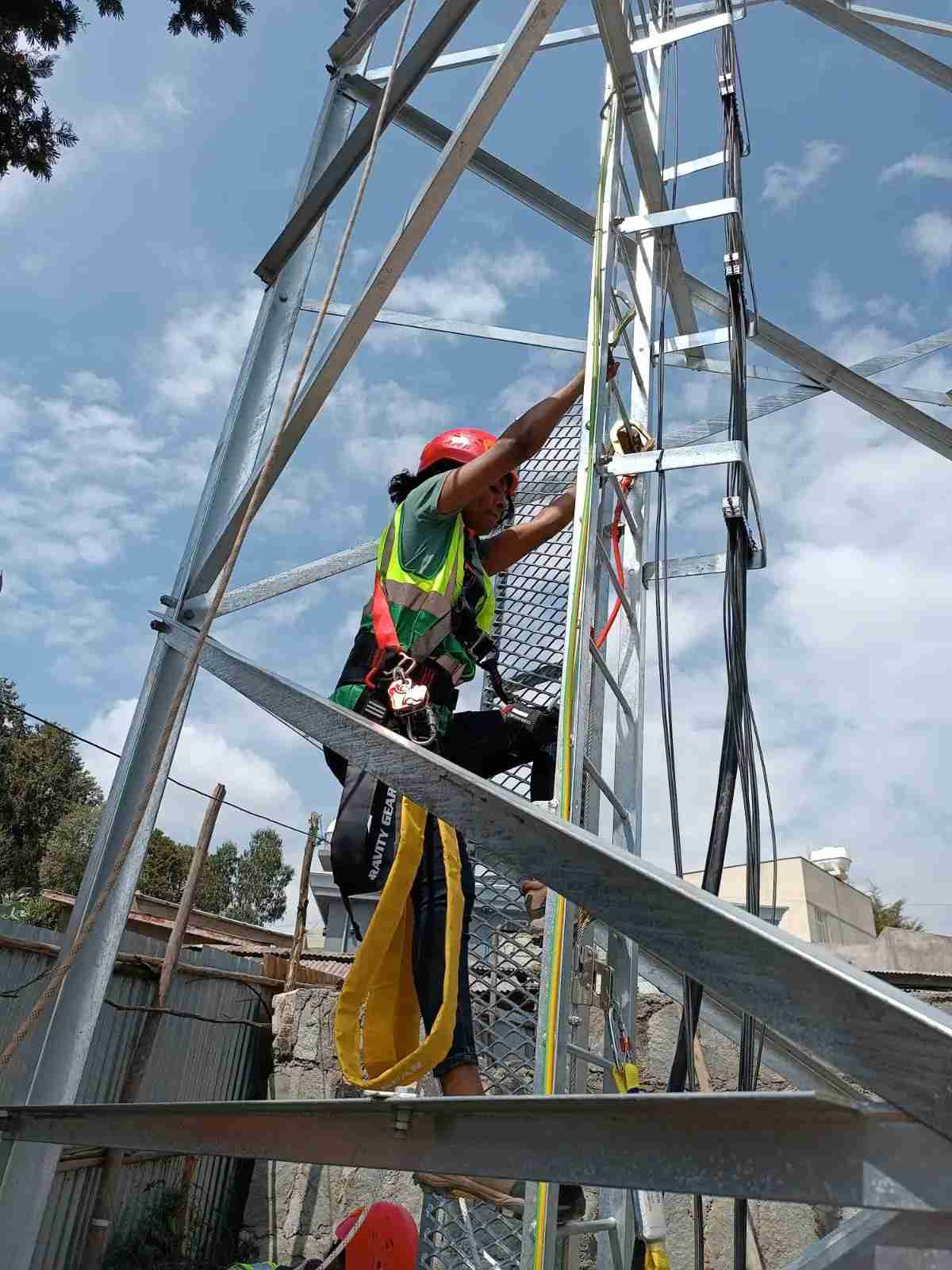
“Being able to climb towers is really important. Working on sites, you never know when you will need it. You may need to check the installations on the tower, so it’s better to be prepared than not,” she explains.
Not one to sit back on her achievements, Fitsum is also a certified Fire Marshall, risk assessment personnel and a first aider. She’s certainly someone you want on your team.
Bringing 5G to more of Ethiopia
Before joining Safaricom Ethiopia, Fitsum surveyed sites in a similar role in the city of Addis Ababa, but she didn’t always work in telecoms. In 2020, she was working in mobile money as an agent for the Commercial Bank of Ethiopia, and before that she dabbled in make-up and hair styling at her sister’s beauty salon.
“I just did it for fun, not as a career, when I was a high school student,” Fitsum tells us.
As a mother of two young daughters, it’s perhaps a skill that could come in handy.
“They are a spirited pair and certainly keep me on my toes,” says Fitsum with a warm smile.
She goes on to explain the challenges of balancing her work and home life but tells us that she is keen to set a good example to her children.
“I do not think that motherhood and career building are mutually exclusive, but managing both roles involved a huge learning curve,” she says.
“I am well organised and use my time very carefully. I make my daughters see the benefits of having a working mum and am pleased they are inspired to be like me because they find my work interesting and observe the financial independence it brings.”
With support from her mother and other caregivers, Fitsum intends to continue making them proud by excelling and pushing herself in the workplace.
“My aspiration in Safaricom is to build my expertise and capability to take on more leadership roles within the organisation as it grows. I am ambitious to learn from other leaders, experts and team members in the department to build a strong foundation for my future career.”
Looking ahead, Safaricom Ethiopia continues to establish its presence and invest in the country, its people and its future. Already securing investment from The World Bank Group, it has the equity, debt and insurance facilities needed to support the construction and operation of its 4G and 5G mobile networks. Which is certainly going to keep Fitsum and her team busy.
“My team and I are currently working on site acquisitions to ensure our network runs across the entire country,” says Fitsum.
“I’m excited to work on 4G and 5G networks because I’m seeing the impact this technology is having in the country.”
More stories



Vodafone launches Express Capacity to quickly meet demand for data centre connectivity
3 minute read