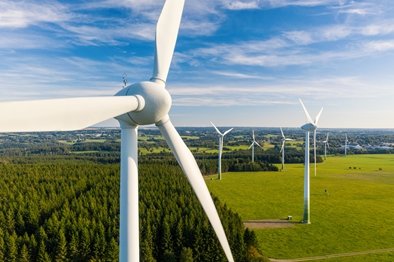
Reaching across land, sea and even space, our network works quietly to support daily life. It connects 180 countries through over a million kilometres of terrestrial fibre and more than 70 submarine cables stretching along the ocean floor.
And behind the scenes, our engineers work tirelessly every day to keep that network running and to keep people, businesses and communities connected.
But connectivity can do more than connect. The same technologies that empower people can also help protect the planet.
That belief underpins our environmental action, using connectivity, data and digital innovation to support end to end climate resilience and adaptation, from prediction and preparation through to response and recovery, helping reduce harm, restore nature and enable more sustainable ways of living and working.
Here are five real‑world case studies that demonstrate this impact in action.
Helping cities breathe cleaner air
In cities like London, air pollution is no longer an abstract environmental issue, it's a public health emergency.
According to the World Health Organisation, almost the entire global population breathes air that's considered unsafe, costing the world trillions each year in lost productivity and health impacts.
In 2016, London formally declared an air quality crisis. Since then, VodafoneThree partnered with Breathe London to help change how cities understand and manage the air Londoners breathe.
By repurposing our network infrastructure, we now support a city wide network of more than 140 connected air quality sensors. These provide real time, hyper local data to local authorities, researchers and hospitals, helping them track pollution, measure the impact of clean air policies and protect vulnerable communities.
The impact is already visible. Since the introduction of the Ultra Low Emission Zone (ULEZ), areas in London where a charge applies to higher polluting vehicles, our sensors show that roadside nitrogen levels in central London have fallen by more than half. When air is measured like any other vital resource, meaningful change becomes possible.
Watch the video below to hear from the Deputy Mayor of London on why this partnership matters for cleaner air.
Helping people and wildlife coexist
The world is facing a rapid decline in nature, with one million species at risk of extinction and growing impacts on people and economies worldwide.
At Vodafone, we recognise our responsibility to help protect ecosystems and biodiversity through responsible management, and we believe digital technology can play a decisive role in enabling smarter, faster action to protect, manage and restore nature.
By harnessing IoT (Internet of Things) and AI (Artificial Intelligence), we're using technology to help address some of the most urgent challenges facing wildlife today.
Around the world, we can see many examples of human-wildlife conflict. For example, in rural Africa, people and animals often compete for the same space. We've developed and trialled IoT connected, solar powered systems that can detect approaching wildlife and alert local communities in real time, helping prevent dangerous human wildlife conflict before it happens.
At sea, AI powered monitoring systems use connected sensors to detect whales as they migrate through busy coastal areas, providing early warnings that help protect both marine life and livelihoods.
And technology is also helping to protect pollinators too. Bees play a critical role in biodiversity and food production, yet populations are in decline. Connected solutions are now helping monitor hives, deter theft and gather valuable data to support better decision making for industry and governments.
These innovations show how digital technology can become a powerful tool in protecting nature and biodiversity.
Watch the video below to learn more.
Smarter monitoring for a changing climate
Protecting people and nature starts with understanding how our environment is changing in real time. From rising flood risks to the growing threat of wildfires, early detection is becoming critical, and digital technology is emerging as one of our most powerful tools.
Vodafone's innovation journey shows how digital infrastructure can help shift us from reacting to environmental disasters to preventing them. What began with IoT enabled early wildfire detection has evolved into using our mobile network itself as a vast environmental sensor, identifying micro climate changes that signal flood or fire risk.
Today, through programmes like the European Space Agency's SafePlace pilot, we combine satellite imagery with ground level data to provide first responders with updates every 10 minutes, crucial moments that can save forests and communities.
In Romania, acoustic "Smart Forest" sensors extend this protection further, detecting illegal logging across a one kilometre radius and safeguarding more than 3 km² of woodland.
Together, these technologies form a proactive defence against climate driven threats.
Learn more in the video below:
Keeping it cool and cutting carbon
Pharmaceuticals can be easily spoiled if conditions change during transport, particularly when there's no real time visibility. It's a costly problem. Around 35% of medicines are damaged this way each year, resulting in more than $30 billion in waste and putting patient safety at risk.
In Iceland, we've worked with Controlant, an Icelandic company revolutionising global pharmaceutical logistics with its cutting-edge environmental monitoring technology, to develop a solution that brings transparency to every stage of the journey. Devices powered by IoT SIMs continuously report the location and condition of products in transit, giving distributors real time insight and the ability to intervene before issues escalate. The result is a reported 99.9% successful delivery rate.
The impact extends beyond healthcare. With supply chains responsible for over 70% of healthcare's carbon footprint, reducing spoilage and unnecessary journeys helps save around 16,700 tonnes of CO₂e each year, proving that smarter logistics can also be more sustainable.
Watch the video below for more details:
Protecting one of our most precious resources
Water scarcity is no longer a distant risk; it's a defining global challenge. Today, 703 million people still lack access to clean water, and the UN warns that by 2050, up to three quarters of the world's population could be affected by drought. As pressure on this vital resource grows, smarter ways of managing water are becoming essential.
Technology is emerging as a powerful part of the solution. From IoT sensors to advanced data platforms, digital tools are helping utilities detect problems earlier, act faster and preserve more water.
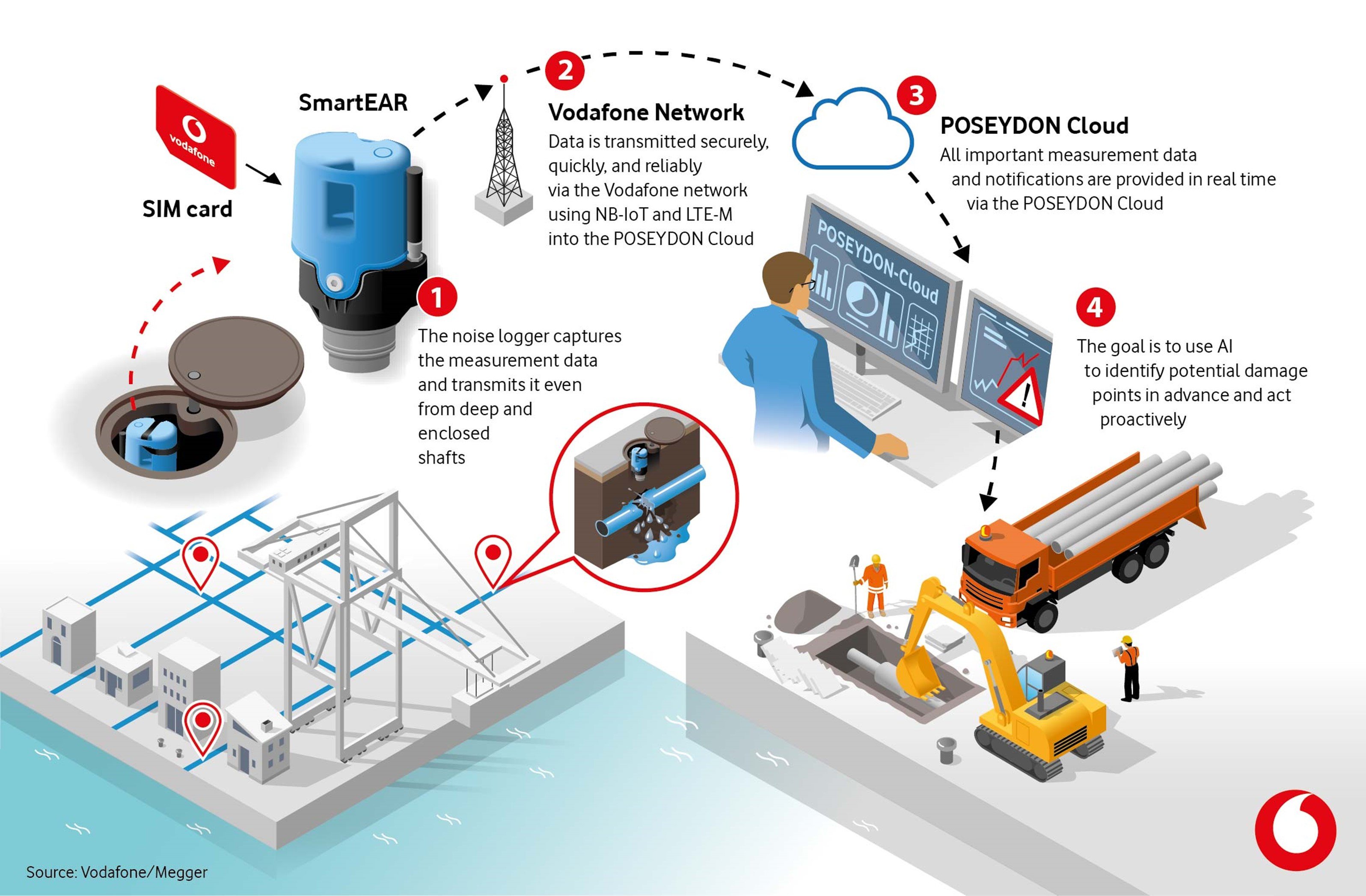
In industrialised countries, up to 30 percent of the water passed through is lost through undetected leaks in pipelines. Through its partnership with SebaKMT, Vodafone Business Germany is providing IoT connectivity for SmartEAR sensors that listen for leaks in water pipes, analysing sound patterns in real time to pinpoint issues before they escalate.
And in South Africa's Gauteng province, where billions of litres of water are lost every day, Vodacom Business and Mezzanine are taking this a step further. Their Digital Water Tower platform brings together meter data, geospatial mapping and demand insights to improve efficiency, guide targeted interventions and strengthen long term water security.
Connectivity with purpose
Connectivity sits at the heart of modern life, and it can also play a powerful role in protecting the planet. From monitoring air quality in our cities to safeguarding forests, water supplies and wildlife, technology is helping turn insight into action.
By combining global networks with data, IoT and innovation, we're working with partners around the world to reduce environmental impact, build resilience and support more sustainable ways of living and working.
These stories show what's possible when connectivity is used with purpose, not just to connect people, but to help protect the world we all share.
More stories
Vodafone achieves a Platinum medal in EcoVadis sustainability assessment for the third year in a row
6 minute read

New GSMA report shows how Europe’s mobile future depends on efficient scale
16 minute read