


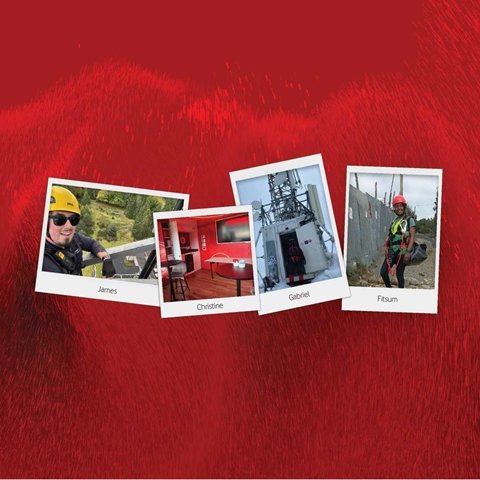
Engineer diaries
Spanning land, sea and even space, our network quietly powers everyday life, stretching across 180 countries, supported by over a million kilometres of terrestrial fibre and more than 70 submarine cables running along the ocean floor.
But world class connectivity doesn’t happen on its own. Behind every signal are engineers working across all our markets, braving heights, weather, distance and pressure to keep our network reliable, safe and performing at its best.
Meet some of the people who make that happen, one climb, one fix and one connection at a time.
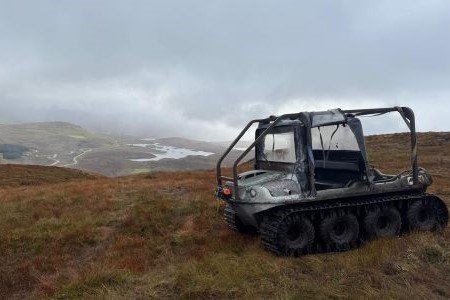
James Foster is a climbing engineer based in the Highlands of Scotland, working across some of the UK’s most remote and rugged terrain to keep critical communications running.
Since joining Vodafone in 2024, he has tackled faults from the Isle of Skye to the Western Isles, often travelling for hours through snow, steep tracks, and off road landscapes to reach remote masts.
Date: 2 September 2025
Location: Mount Eagle Mast, Scotland
Today I climbed the 80-metre mast at Mount Eagle - the highest I’ve ever gone so far. Imagine climbing up the Statue of Liberty, except the walls have vanished and you’re picking your way up a skinny little staircase, completely exposed to the sky.
The whole structure is about 120 metres to the very top, but we were carrying out an audit, so I took the opportunity to head up as far as we needed. These audits matter more than people probably realise. They’re how we make sure the mast is still structurally sound, the equipment is safe, and the network can keep performing without unexpected issues.
It still amazes me how normal climbing has become. Before joining, the highest thing I’d ever climbed was a ladder, and now here I am, clipped onto a mast with a view that stretches for miles.
I checked bolts, took readings, and snapped updated photos for the audit records - all the things that help us spot wear, weather damage, or performance issues before they ever affect someone’s signal. It’s just another day’s work, really, except with Scotland laid out beneath your boots.
At one point I paused and spotted the village where I live, tiny in the distance. That hit me. How surreal it is to be working at a height most people will never experience. But more importantly, making sure communities like mine in remote Scotland can stay connected.
We have to audit the tower every two years, so I hope I get to climb this one again when the next audit comes around. There’s nothing quite like being up there. Quiet, steady, and strangely peaceful.
Date: 14 November 2025
Location: Isle of Skye, Scotland
Today I was back on Skye, working on a stubborn fault affecting one of our emergency services customers. It’s a fair trek, three and a half hours each way from home, and when I headed out this morning, the world was still wrapped in darkness.
This is important as the customer relies on our fixed line radio link as part of their critical backup network, so even small errors matter, the resilience of their communications depends on both routes working perfectly.
When I reached the site this morning, it was just me, a tiny cabin with no seat, and the wind sweeping across the hill. I quickly remembered my colleague’s advice when I first joined: “Get yourself a camping chair and a little table. Trust me.” So out came the fold up picnic table from the back of the car. Still the best investment I’ve made.
Inside, the work is all about careful checking: connecting my equipment to the radio unit, running tests to spot any signal errors, and monitoring the technology that carries the connection from one site to another.
Some of the equipment sits outside too, including the part that sends the radio signal across the landscape. Depending on where it’s mounted, I sometimes have to scale the tower to get to it. Fortunately, I was spared that climb today - the bitter cold made me rather grateful to stay on the ground!
The fault finding process is slow but exact. We place specialist testers at different points along the link to see where errors start appearing. Today, our end stayed completely clean - no errors, no drops, no faults. That allowed us to narrow it down to the customer’s equipment, giving them the evidence they needed to investigate on their side.
For the customer, that clarity is essential. This isn’t just a business connection; it’s part of how emergency services stay connected across remote Scotland. They need fast, reliable communications at all times, and our job is to make sure our part of the network is rock solid.
The Highlands can be challenging, but days like this remind me why the work matters. It’s careful testing, problem solving, and teamwork, all so people who depend on us never lose the connection they need. Another long winter drive home, but I’m glad we’re closing this off. And honestly, despite the cold, the hours, and the roads, I do love this job.
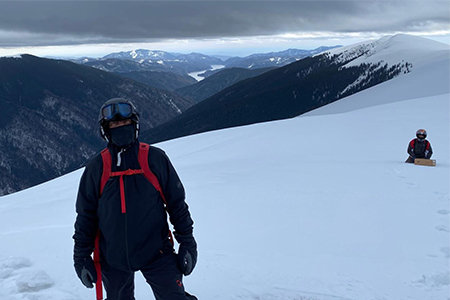
Gabriel is a seasoned telecommunications professional. Now the Team Leader of Field Service Operations in Vodafone Romania, he began his career in 1999 in the IT department when the company was still known as Connex. In 2001, as data services were introduced, he transitioned from IT to become a field telecommunications engineer.
After eight years in the field, he moved into a communications focused role, broadening his professional experience before returning to the telecom sector in 2016 to coordinate field teams. Since 2020, he’s been back at Vodafone, bringing deep technical expertise and a passion for hands on problem solving.
Date: 2 February 2026
Location: Transfăgărășan, Romania
I want to reminisce about an outstanding intervention from back in my field days, one that was both challenging and rewarding. Here it goes…
It happened in November 2007 at one of the mobile sites for Transfăgărășan, located on a peak in the Carpathian Mountains, where we needed to restore both voice and data services. The name Transfăgărășan may sound familiar, as the beautiful mountain road was popularised by Top Gear.
Reaching the site in winter is an adventure on its own - you must leave your car behind and continue by snowmobile. You have to be prepared for everything: gasoline, a chainsaw to clear fallen trees from the path, a special whistle to scare away wild animals, proper winter equipment, and… a little bit of luck.
After my team finally reached the site, we discovered the first issue: a short circuit caused by an electrical cable chewed by a mouse. There wasn’t much we could do for the mouse, but we managed to restore power.
There was no time to celebrate, though. We identified another problem with the indoor unit of the microwave system providing data for Salvamont, the national mountain rescue service, with which Vodafone has a strong and ongoing partnership for over 20 years.
One of the Ethernet ports was faulty (just like a broken LAN port on a computer), but once we replaced the module, the services were fully restored. And in restoring that connection, we restored something just as important: our customers’ confidence that they can rely on us when it matters most.
The return trip was a bit scary and full of adrenaline: night had already fallen, and the snow mobile got stuck in deep snow. We stayed calm, and thanks to exceptional teamwork, we managed to free it and make our way home safely. Exhausted, but smiling, knowing that people could once again rely on Vodafone’s services whenever they pass through Transfăgărășan.
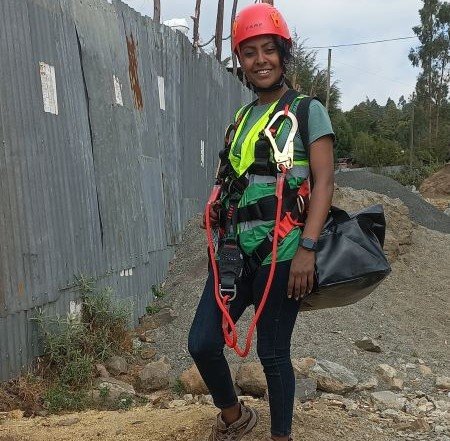
Fitsum Gorfe is the Site Acquisition Team Lead at Safaricom Ethiopia and one of the organisation’s earliest employees, joining as the 17th team member in January 2022.
As a civil engineering graduate from Bahir Dar University, she has played a pivotal role in the rollout of Ethiopia’s new telecommunications network, helping acquire more than 2300 new built sites across the country. To learn more about Fitsum’s career, click here.
Date: 8 October 2022
Location: Addis Ababa, Ethiopia
This week has felt like one of the most defining chapters of my engineering career: leading the large scale site acquisition project for Safaricom Ethiopia, the first private telecom operator in the country.
It’s been a journey… As one of the first local technology employees, I found myself stepping into completely uncharted territory. Like with any groundbreaking firsts, there were no blueprints - no established processes, no clear national permitting standards, and limited awareness among officials about what our work actually involved.
Early on, it became clear that many people were simply unfamiliar with the purpose of our activities. That sometimes led to delays or repeated checks, but it also opened the door for conversations. To keep things moving, we focused on community engagement, helping local authorities and residents understand our role and building relationships that made collaboration much smoother.
Setting up dozens of newly built locations where mobile network equipment would go in, all under extreme time pressure, felt like assembling an aircraft mid-flight.
Being the first meant navigating a lot of ambiguity. I found myself shaping policies and procedures almost from scratch. I felt the weight of responsibility constantly: balancing radio equipment regulations, ensuring sites were near power sources and accessible roads, and negotiating land leases that worked for everyone.
The toughest part wasn’t the technical work; it was the emotional effort needed to build trust. Convincing people that we were there to enable progress, not create disruption. Calm communication became my anchor. Whenever pressure spiked, I paused, breathed, and focused on solutions.
Just before the Addis Ababa launch, we faced a moment that could have escalated quickly: a site owner supporting 65 dependent sites grew concerned about our agreement and temporarily paused power. His request for clarification came at the worst possible time, but it also reflected a need for reassurance. I stepped in to listen, clarify, and help find common ground.
By keeping the conversation open and respectful, we regained power and avoided a crisis. Looking back over this week, I’ve realised I’m steadier under pressure than I ever gave myself credit for. Restoring those sites protected customer connectivity at a critical moment and reminded me exactly why this work matters.

Christine Dakers is a long serving Vodafone engineer whose career has taken her from legacy copper systems to major national network upgrades. Based at the Edinburgh Mobile Telephone Exchange, she has worked through some of the most demanding moments in Vodafone’s history - including the historic millennium night.
Date: 1 January 2000
Location: Edinburgh Mobile Telephone Exchange, Scotland
While the world was out celebrating the new millennium last night, I was tucked away in the Edinburgh Mobile Telephone Exchange, the hum of equipment around me and my eyes fixed on processor load screens. It felt strangely quiet for such a historic night.
Every mobile call in the country was passing through telephone exchanges that behaved more like giant computers, and if even one of these exchanges became completely overloaded, it could reboot without warning. This meant all calls could drop with no guarantees it would come back online quickly, and customers wouldn’t have been able to call their loved ones and share this once in a lifetime occasion.
Just after midnight, the systems that keep the country’s mobile network running were being pushed to their limits. The computers handling calls were at 99% capacity, close to the threshold we monitor carefully. And they held there for hours. I sat beside my manager, both of us watching the numbers closely and managing the load to keep everything stable.
I stayed focused on the alarm list as it updated, keeping a calm front while working through scenarios in my head. Like that saying goes: calm as a swan above the water, paddling furiously under the surface.
Thankfully, nothing went wrong. A tough call was made to limit the number of connections, so some customers heard a “Network Busy” tone. It wasn’t ideal, but it meant the network stayed stable, and if people couldn’t connect on the first try, they could on the next. A small inconvenience that helped keep everyone reliably connected when it mattered most.
How did we celebrate once the processors started calming down? The Glasgow team were treated to a curry. Lucky things! In Edinburgh, we got cheese and pickles on cocktail sticks at 3am. Not the traditional glass of champagne, but it made us smile.
Yesterday, I meant this morning (oops, still tired), has taught me something simple but grounding: prepare for the worst, hope for the best, and trust the people who sit beside you when things get tense.
Date: 10 March 2006 at 2:55 am
Location: Edinburgh Mobile Telephone Exchange, Scotland
I’m writing this with my jacket still thrown over the back of my chair and the hum of the switching room still buzzing in my ears. Tonight is one I don’t think I’ll ever forget.
A huge technical project was well underway under my direction. Thousands of the old school copper routes were being replaced with a new, much more advanced system. This had to happen without turning anything off as it was super important our customers could still have reliable phone and data services during the switch. In simple terms, it felt like trying to rebuild an entire city’s road network while the traffic was still moving.
Hour after hour, I’d been tracing connections, checking the database, and reprogramming equipment one careful step at a time. It was already the kind of long night where you lose track of how many coffees you’ve had. Then, without warning, everything lit up. The alarm screens began to scroll faster than I could read them. The whole of one network provider was lost.
A moment later, my phone started ringing nonstop. One frantic call after another from colleagues. For a second, my mind was just full of noise, but I knew if I let the panic in, I’d lose control of the situation. I explained to the first caller that I could fix the problem if everyone just stopped phoning me, and then I did the only thing that made sense: I switched the phone off. Ten minutes of silence. Ten minutes to breathe, think, trace the fault and fix it. It worked!
The network was offline for around 10 minutes. Even though it was 2am and disruption was minimal, we know any downtime matters - so we worked quickly to bring everything back up.
Now that the alarms have finally stopped, the room feels strangely still. I’m exhausted, but proud.
More stories



Vodafone launches Express Capacity to quickly meet demand for data centre connectivity
3 minute read