We've been enhancing mobile technology for over 40 years
Protecting the health and safety of our customers and the wider public has always been – and continues to be – paramount. Our technology operates well within the safety limits set out by international guidelines. The constant evolution of mobile technology can give rise to public concern about the potential health effects of devices and base stations. The World Health Organization’s opinion remains the same: there is no evidence to convince experts that this technology poses any risk to human health.



We follow the scientific evidence
We follow current scientific evidence to ensure our services and products meet safety limits and comply with standards and laws. We monitor peer-reviewed research and update our Group Electromagnetic Fields (EMF) leadership team when evidence changes. Our quarterly-meeting EMF team monitors all policies and practices.
We are committed to

Collaboration
Actively collaborating with industry bodies to contribute relevant evidence to the understanding of mobile technology

Peer reviewed evidence
Supporting open and fact-based debate on peer-reviewed published scientific evidence

Best practice
Implementing best practice and complying with applicable laws in the countries where we operate

Health and safety
The health and safety of all of our employees, customers and the public
How your phone works

Conversion
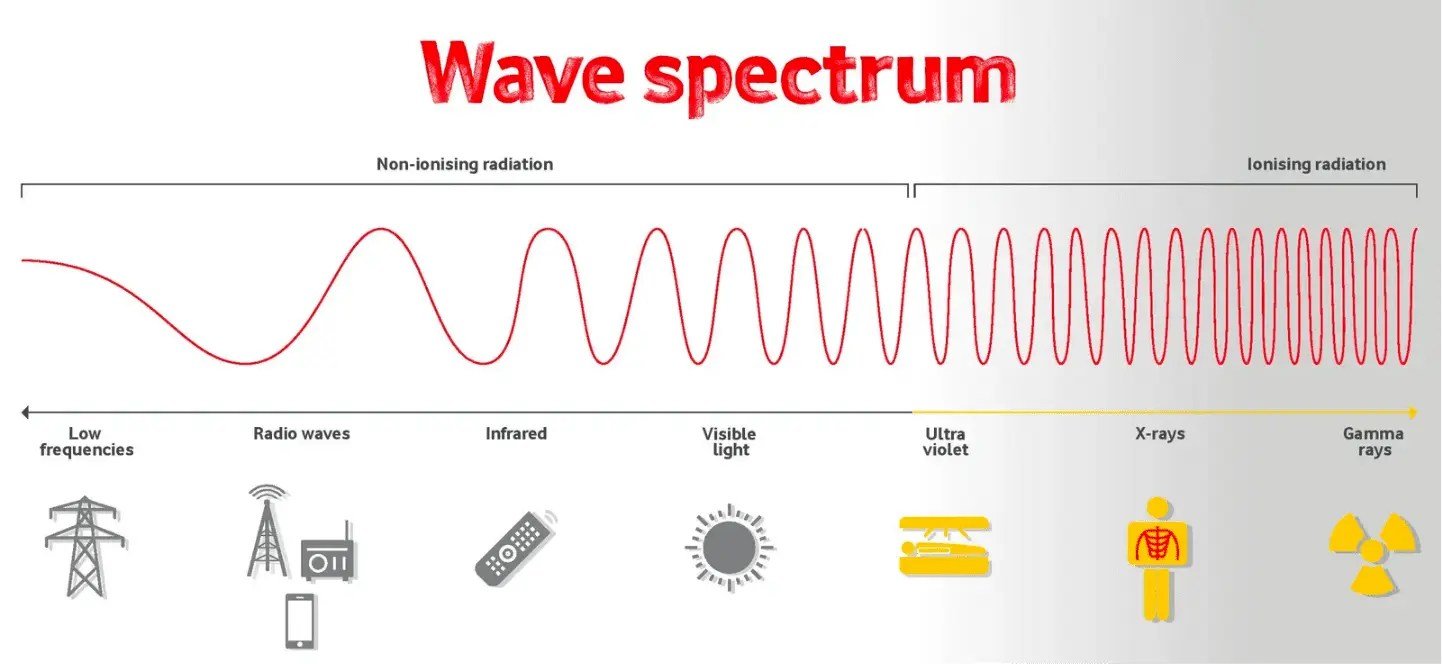
Your mobile device converts voice and data messages into radio waves, part of the electromagnetic wave spectrum.

Transmission
The radio waves are transmitted as electrical signals through a network of base stations.

Receiving
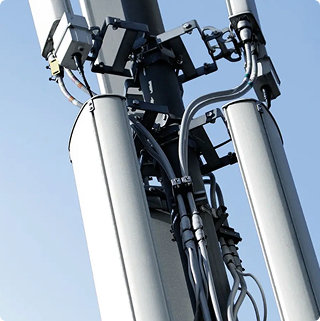
Each station has a cabinet and antennas to send and receive communications. Antennas are usually fixed to a mast or tower – which is just a support structure.

Relay
Base stations relay your signal through cables – or a microwave connection – to a core switching centre, where it’s routed to its destination using the same technology.


What happens in your phone?
Find out what happens when you make a call or send a message from your mobile phone. And how the technology works, from mast to device.
Key topics
We are absolutely committed to ensuring the health and safety of our employees, customers and the communities in which we operate. Our vision is to lead within the industry in responding to public concerns about mobiles, masts and health by demonstrating leading-edge practices and encouraging others to follow. We have defined governance and policies to deliver on this commitment.
How signals are transmitted
Your mobile uses radio waves to transmit signals to a network of base stations. These waves are part of the electromagnetic wave spectrum and travel at the speed of light.
When using your mobile device to go online, it transmits your request to access content as radio waves, converting them into electrical signals. These are processed through a network of base stations and cables to the core switching centre. The centre sends content back to your device as electrical signals via your nearest base station, which transmits them to your mobile device. Your phone then converts the signals back into text, pictures, sound or video. Antennas need to relay your communications from a raised position on a mast to reduce obstacles that can interfere with the signals.
When demand on our network is high, we may add radio antennas to a base station. While most people welcome the improved coverage this brings, installing new stations or antennas can generate questions from local communities, usually about the visual impact of base stations and masts, or about the health effects of stations. We are committed to addressing those concerns openly and transparently.

Radio waves and your health
Our mobile devices and base stations operate well within the guidelines set by the International Commission on Non-Ionizing Radiation Protection (ICNIRP). This is an independent advisory body working with the WHO. The guidelines use substantial safety margins and are designed to protect everyone, regardless of their age.
While a mobile device is used close to the human body, a small amount of energy from the radio waves is absorbed and converted into heat. Scientific research has concluded that a temperature rise of up to 1°C is safe for the body and our normal biological processes cool us down. The vast majority of experts, including the World Health Organization (WHO), agree that mobiles, operated in line with international guidelines, do not produce enough energy, and therefore heat, to cause long-term changes in the body.
WHO periodically reviews the science and is conducting a health risk assessment from exposure to radio frequencies, covering the entire radio frequency range, including 5G, to be published by 2022. WHO will review scientific evidence related to potential health risks from 5G exposure as the new technology is deployed, and as more public health-related data become available.

Scientific evidence
Our mobile devices and base stations operate well within the guidelines set by the International Commission on Non-Ionizing Radiation Protection (ICNIRP). This is an independent advisory body working with the WHO. The guidelines use substantial safety margins and are designed to protect everyone, regardless of their age.
While a mobile device is used close to the human body, a small amount of energy from the radio waves is absorbed and converted into heat. Scientific research has concluded that a temperature rise of up to 1°C is safe for the body and our normal biological processes cool us down. The vast majority of experts, including the WHO, agree that mobiles operated within international guidelines do not produce enough heat to cause long-term changes in the body.
There is no evidence to convince experts that mobiles or base stations carry any risk to human health when operating within these international safety limits. WHO agrees with other authorities that exposure to radio frequency fields from mobile devices, within international guidelines, does not harm people. WHO will continue to review the science relating to mobile phone exposure, including from 5G. Vodafone closely monitors all such research and views of bodies such as WHO.

Our EMF leadership team
Our Group EMF (electromagnetic field) leadership team includes experts from our technology, health and safety, and enterprise teams, plus experienced representatives from our local markets. The Group EMF team set our strategy on mobile technology and health, and they also oversee compliance across our operating businesses. The team meet four times a year and report twice a year to the Group Executive Committee and the Vodafone Group Board on developments in science, policy and compliance.
We formally review compliance with our Group EMF policy across all our local markets, which may involve addressing areas of partial or non-compliance. We also assess compliance in-depth for one market in Europe and one in Africa each year, with findings reported to the Group Audit and Risk Committee. EMF leaders in each operating country manage compliance with our group policy locally. They also meet annually to share best practices.
Is 5G safe to use?
Yes. Just like any mobile technology, or others such as TVs, WiFi routers, hairdryers, radios or microwave ovens, 5G is covered by national and international exposure guidelines and regulations. There has been scientific research on mobile frequencies for decades, including those used by 5G. Providing exposure is within the guidelines, and the consensus is there’s no adverse impact on health.
Vodafone’s masts fully comply with national guidelines, and we continually monitor to ensure we meet all regulations. In addition, all the phones we sell are rigorously tested to ensure they comply with international safety guidelines.
Most countries set their national regulations based on international guidelines from the International Commission on Non-Ionizing Radiation Protection (ICNIRP).
ICNIRP’s guidelines are based on reviewing thousands of separate pieces of scientific research, and apply in the same way to 5G as they do to existing 2G, 3G and 4G technologies – and other radio frequencies used by radio and TV.
In March 2020, following an extensive review of the best science currently available, the independent body ICNIRP updated the international safety guidelines that provide protection from exposure to EMF from mobile devices and networks.
Although ICNIRP made several minor adjustments to its 1998 guidelines, the review confirmed that there are no adverse effects on human health from radio frequencies used by mobile technologies, including 5G, if exposure is below these guidelines.
The World Health Organization says “A large number of studies have been performed over the last two decades to assess whether mobile phones pose a potential health risk. To date, no adverse health effects have been established as being caused by mobile phone use.”
There is no credible scientific evidence linking 5G or mobile technologies to the spread of Coronavirus.
The international standards body ICNIRP considers all potential impacts on human health relating to mobile phone frequencies including 5G. Following an extensive review of the best science currently available, in March 2020 ICNIRP confirmed that there are no adverse effects on human health from 5G frequencies if exposure is within their guidelines.
The European Commission published a statement on their Fighting Disinformation pages, ‘There is no connection between 5G and COVID-19. The Coronavirus is a virus that is spread from one person to another through droplets that people sneeze, cough or exhale. 5G is the new generation of mobile network technology that is transmitted over non-ionising radio waves. There is no evidence that 5G is harmful to people’s health.’
5G handsets, as they become available, comply with stringent testing standards that cover all the frequencies they can operate at, and at their maximum power.
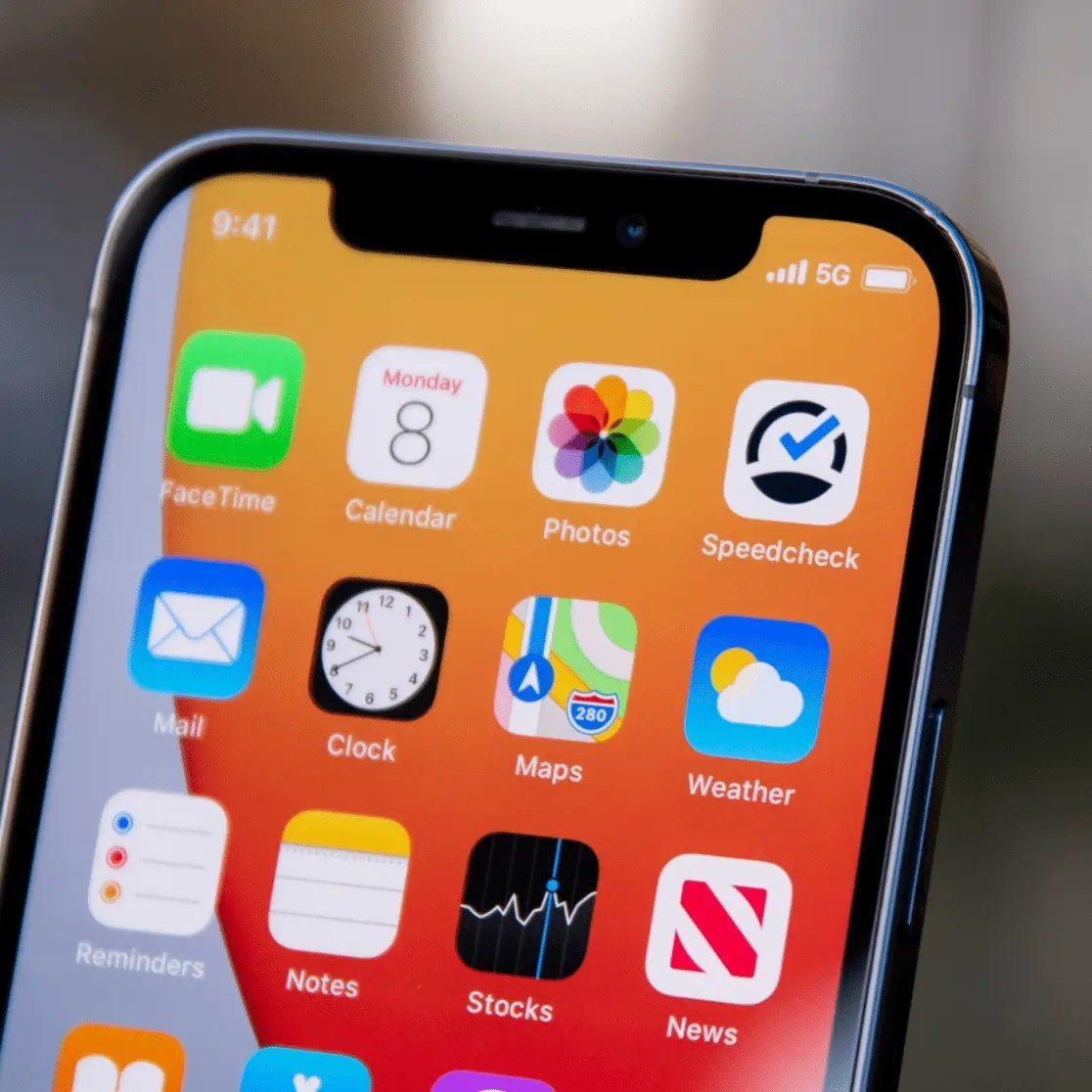
5G can use spectrum within three key frequency ranges:
- Below 1 GHz: to support widespread coverage across urban, suburban and rural areas.
- 1-10 GHz: for a mixture of coverage and capacity. New spectrum in the 3.5 GHz band will be used for 5G services.
- Above 10 GHz: For ultra-high speed 5G services, typically using ‘small cells’.
Some of these bands are at similar frequencies to existing mobile technologies already in use today, such as 4G. This also means that with a small antenna upgrade, or addition where required, mobile operators will be able to use the same masts currently providing 4G services for 5G as well.
Small cells are a type of base station with very low power antennas designed to service a small coverage area with high network traffic, such as bus shelters, train stations and shopping malls.
Measurements on 4G small cells by the French spectrum agency found that levels in nearby areas remained well below the international safety guidelines
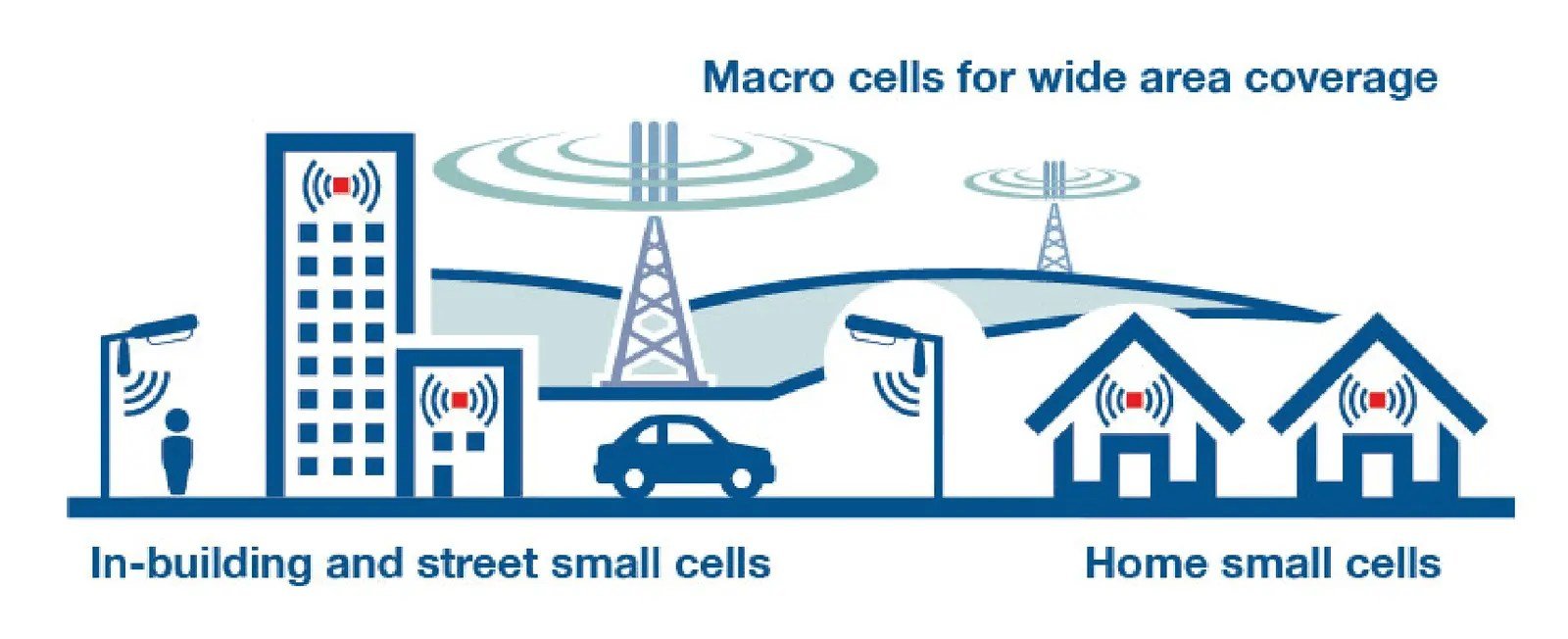
diagram from GSMA
International reports
The reports produced by a range of global or regional institutions are shown in reverse chronology, with the latest publication shown first.