A secure and resilient connected future for everyone
Our connectivity is critical national infrastructure and is relied upon by millions of customers around the world. We prioritise cyber and information security across everything we do.
Cyber attacks are part of all of our lives today and will be in the future. Our operating model and strategy are designed to manage the challenging threat landscape. We implement controls that prevent, detect, respond and recover from attacks. By taking this approach we aim to minimise impact to customers and the services we provide.


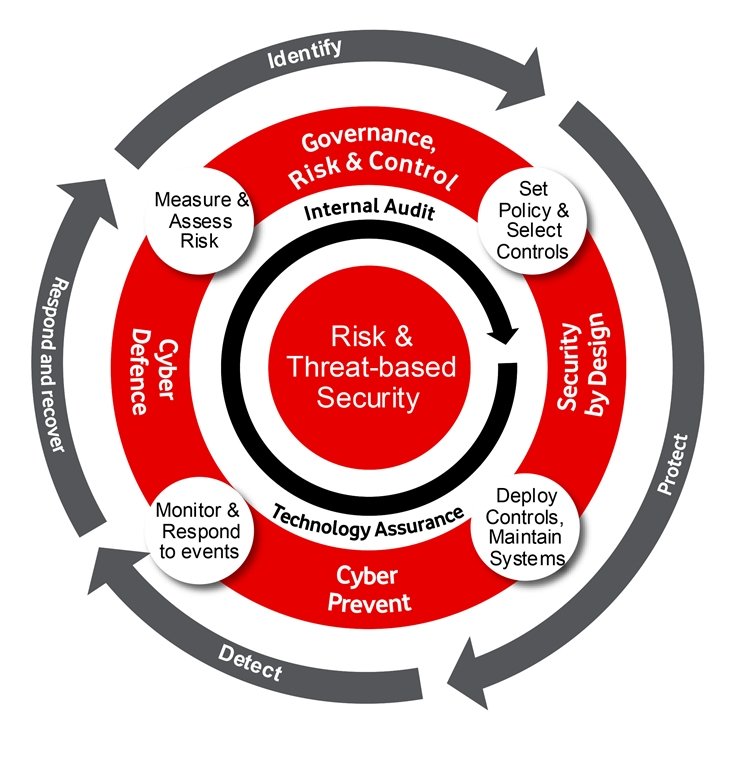
Our approach to cyber security
Our globally consistent cyber security operating model is based on leading industry security standards published by the US National Institute of Standards and Technology. The model is designed to reduce risk by constantly identifying threats, defending, responding and continuously improving security.
We operate cyber capabilities with an in-house international team of over 900 employees. Our scale means we benefit from global collaboration, technology sharing, deep expertise and greater visibility of emerging threats. Our global security operations take inputs and telemetry from all the markets where we operate. We augment internal capabilities with third party specialist technical expertise where necessary, such as digital forensics, red teaming and penetration testing, and use specialist resources to test our telecommunications networks.

Our vision is a secure and resilient connected future for everyone
We are motivated by a commitment to customer trust and transparency, providing sustained cyber security and resilience to shape a secure society and inclusive future for all.

Our cyber code
Every employee has responsibility for cyber security. The Vodafone Cyber Code has been designed to simplify and explain basic security controls and procedures to all employees. The Cyber Code is embedded in our Code of Conduct and is the foundation of how we expect all employees to behave for best practice in cyber security. It consists of seven areas where employees must follow good security practice.
Risks and controls

The challenge
Risk management is fundamental to maintaining the security of our services across every aspect of our business. We dedicate significant resources to managing cyber security risk, which we separate into three main areas: internal, external and supply chain.
We conduct regular reviews of the most significant security risks affecting our business and develop strategies and policies to detect, prevent and respond to them. Our cyber security strategy focuses on minimising the risk of cyber incidents that affect our networks and services. When incidents do occur, we aim to identify the root causes and use them to improve our controls and procedures.
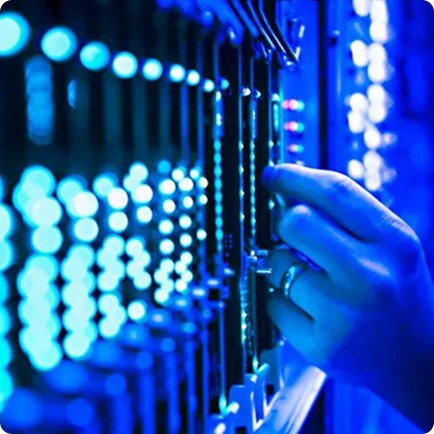
Our risk and control framework
We have a common global methodology for cyber security risk management. By mapping threats and specific attack techniques to the controls that most significantly reduce risk, this allows gaps to be highlighted.
We have set targets for key controls to be effective, meaning they are well-implemented and cover the relevant systems. New targets are set each year. Our control framework evolves based on the threat landscape, technology changes, our strategic and business priorities, and changing regulation.

Mobile Networks
Every new mobile network generation has brought increased performance and capability, along with new opportunities in security. We have updated our security standards to implement the latest 5G features in our core networks. We also test security in our radio networks using independent third-party testing companies. We continue to collaborate with other players in the Open RAN ecosystem to improve security, including adding requirements to the Open RAN specification, publishing internal security standards, and benchmarking vendors against these.
Quantum computing
We are preparing for a time when quantum computers able to break certain cryptography are available at scale. Through our joint research with IBM, we have developed a risk-based approach to mitigate the risks of existing cryptography, which could be more easily broken by a quantum computer. We are identifying where we are using cryptography that is potentially vulnerable to attack from quantum computers, defining supplier requirements and developing the ability to update our cryptography when new threats emerge.

Artificial intelligence
We take the responsible use of AI seriously and seek to balance the opportunities and security risks associated with AI. All of our work in this space is guided by our AI Framework and security teams across the business collaborate under our global responsible AI committee which agrees policy, mitigates threats, and identifies and selects use cases for implementation.
To reduce the risks of misuse, we limit access to public AI applications. We have developed an awareness programme and updated our policies to make it clear to our employees what data must not be shared with public AI applications. We have defined requirements for internal AI application development including risk assessment, designing for transparency and lack of bias, and providing the right degree of human oversight of results.

Satellite technology
We are incorporating satellites into our network. Satellites are used where traditional connectivity is difficult or uneconomic or where base stations cannot be deployed. We assess and validate that these services meet security requirements set by standards groups and our own policies and standards.

Threats and incidents
An important part of our operating model is to gather intelligence and insights about threats. We actively engage with stakeholders across industry, with regulators, standard-setting bodies and governments. Collaboration is vital to respond to threats, protect our organisation and workforce, and build safe online and digital spaces for customers and society.
As a global connectivity provider, we see a range of cyber threats. We use our layers of controls to try to identify, block and mitigate threats and reduce business or customer impact. Our global security operations capability handles billions of events and logs from sensors across our footprint, detecting potential threats and events.
We classify security incidents on a scale according to severity, measured by potential business and customer impact. In the event of a cyber breach, disclosure is made to the relevant authorities in line with local and global regulations and laws and a risk assessment considering the impact on customers. We complete post-incident reviews to learn the lessons from incidents and any improvements needed.

NEWS
All the latest
View all news


Europe’s digital backbone: Why secure connectivity is now a core pillar of defence
2 minute read