We believe society needs to move to a more efficient, circular economy focused on eliminating waste.



The UN estimates that as much as 50 million tonnes of electrical waste (‘e-waste’) is produced globally each year. Only 20% is formally recycled. The amount of e-waste generated per year worldwide is projected to increase to 82 billion kg by 2030.
Vodafone is committed to minimising the generation of e-waste from our business operations and from the devices we sell. To do so, we developed our waste and circularity strategy, focusing on two areas of e-waste: the network equipment used to run our fixed and mobile access networks and the devices that we provide or sell to customers.
Network equipment e-waste and circularity
The telecommunications industry generates e-waste from used electronic network equipment, such as radio antennae or decommissioned data servers. Vodafone is committed to minimising the generation of e-waste from our business operations as we continue to maintain and enhance our networks.

How we manage waste across our business and network
We know that e-waste from our networks can harm the environment if not disposed of properly. E-waste, which includes discarded electronic devices like computers, monitors, and mobile phones, contains toxic substances such as mercury and lead that can pose severe risks to human health and the ecosystem if they are not treated responsibly. That's why we're taking steps to adopt a more circular approach to managing our network equipment.
We're committed to working with suppliers to increase opportunities for the repair, reuse, refurbishment and responsible end-of-life management of network equipment. When replacing or upgrading network infrastructure, we aim to source equipment designed to support repair, refurbishment and reuse where feasible.
Whenever possible, we reuse or resell network equipment that we've decommissioned. We manage our network assets smartly to minimise the need to buy new equipment, extending the useful life of each asset and optimising opportunities for reuse. To support this, we've developed our Asset Marketplace, a platform that allows used network equipment from one of our operating companies to be reused by another or resold to ensure the equipment's lifetime is extended as much as possible. As the platform was successful, we worked with the industry association GSMA to scale this solution and start addressing e-waste with other companies.
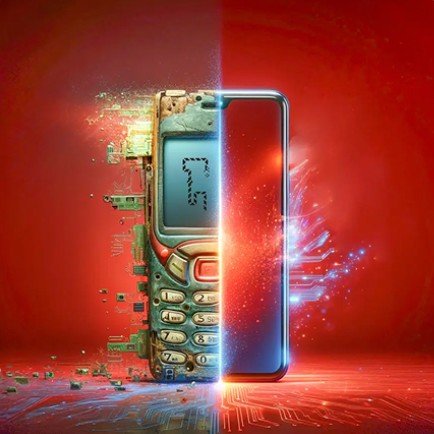
If reuse or resale isn't possible, our policy is to avoid sending e-waste directly to landfill or incineration. At the end of its useful life, electronic and electrical equipment decommissioned from our network is sent to responsible and authorised recycling partners. We are aware that sending network equipment e-waste to third party recycling partners does not guarantee that all materials are recovered during the e-waste recycling process.
Our circularity journey
Our journey towards achieving our goal has given us a better understanding of the complexities of the circular economy. In recent years, we have focused on strengthening operational processes that track our network equipment from decommissioning, through reverse logistics (maximizing opportunities for re-use or re-sale) and eventually to end-of-life processing as e-waste. We have begun to leverage our partnerships and supplier engagement to improve our understanding of downstream e-waste recycling processes, and where possible promote increasing the rate of material recovery from our network equipment e-waste.
We are strengthening our approach to circularity by working more closely with suppliers and industry partners. For example, we regularly provide training and guidance for our procurement teams on this topic, and stay active in industry groups that encourage more circular product design and services. We are in the process of selecting a new European recycling partner, with the capabilities needed to provide us with better visibility of downstream e-waste recycling processes and a shared ambition to maximise the proportion of materials that are recovered and put back into use. As we build on these partnerships, we aim to work with other operators to establish shared industry standards and improve how progress is tracked across the sector.
At the same time, we continuously improve our own internal processes to keep equipment in use for longer. With the opening of our new EU logistics hub, we hope to centralise how equipment is returned, assessed, and prepared for reuse, helping us manage second life opportunities more consistently and efficiently across our markets. To further reduce our reliance on virgin raw materials, we are also developing a Vodafone owned platform that will allow equipment to be reused or resold at scale, while also exploring more ways to repair or refurbish damaged items. Over time, we plan to expand these improvements across our global footprint to create a more circular and resilient approach to managing network equipment.
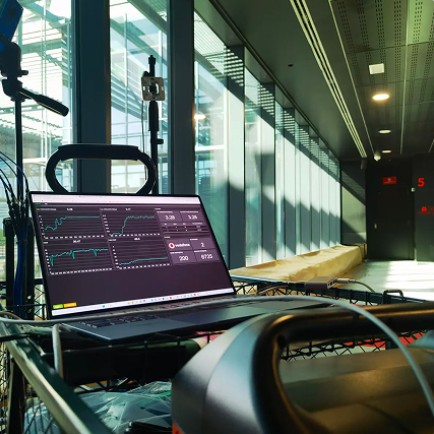
We've also scrutinised our network waste data to measure our targets. Our investigations not only led to improvements in operational and data reporting processes, but also provided further insights into some of the barriers we continue to face when reusing and recycling electronic and electrical equipment.
The complexities of waste transfer regulations limit how much we can scale up global reuse of network equipment via our asset marketplace. Similarly, limited e-waste recycling capabilities in some countries where we operate continue to limit the ultimate rate of material recovery from e-waste recycling.
To address these, we actively engage with strategic suppliers to improve data insights into their e-waste management processes. These insights will shape the next stage of our journey as we strive to continuously improve the quality of our network waste equipment data and influence action beyond our operations, working with others in the electronics value chain, towards a more circular system for network equipment.
Device e-waste and circularity
We are committed to helping more of our customers bring their used electronic devices back to us, by providing channels and attractive propositions for product take-back, and raising awareness to encourage greater participation. We also work with others across our value chain and wider ecosystem to build a more circular economy, in which more of the metals and materials in the products we sell can be recovered to help reduce the need for raw material extraction.
How you can take part

Choosing which phone to buy
Purchasing a refurbished smartphone saves around 50kg of CO2e (Carbon Dioxide Equivalent) – making its contribution to climate change 87% lower than that of the equivalent, newly manufactured smartphone. It removes the need to extract 76.9 kg of raw materials1. Vodafone offers a range of high-quality second-hand and refurbished devices that support device reuse and refurbishment.
Learn more about choosing refurbished devices

Choosing your phone responsibly
To help consumers make more informed device choices, we encourage our mobile phone providers to use Eco Rating, an initiative that aims to provide reliable information regarding the environmental impact of mobile phones – from production to use and disposal. It provides insight and guidance on how to make more sustainable decisions about your phone.
Purchasing sustainable equipment
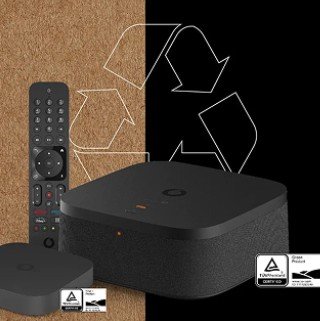
We have significantly reduced the use of plastics in the home products we design and those that carry the Vodafone brand. Our standard third-generation Vodafone TV 3 Set Top Box device casing now comprises 96% recycled plastic (115g), while remote controls for both devices are now made from 85% recycled plastic (46.9g).
Our attention to sustainability elements for our home products has earned them the Green Product Mark certification from TÜV Rheinland. This certification highlights our dedication to minimising our environmental footprint and promoting sustainable practices throughout the lifecycle of our products.
Why should you consider a refurbished phone?
Taking care of your device
Facing damage or technical issues with your current phone? Try repairing it instead of disposing of it. It is estimated that replacing a phone after four years instead of three (which increases the lifespan of a smartphone by 33%) could prevent annual carbon emissions equal to the emissions generated by the entire country of Ireland in a year2. We offer after-sale services and our Vodafone Insurance programme to prolong the lifecycle of existing devices.

Repurpose your unwanted phone with Trade-in
Disposing of your device
As technology evolves, more devices are manufactured, and vast amounts of e-waste are created. Consider trading-in your unwanted devices to be refurbished and resold or responsibly recycled to support a circular economy. We offer an instant, guaranteed saving when you trade in using our Trade-in Tool. If you go through Vodafone’s trade-in programme, you will also be supporting WWF conservation projects across the world, thanks to our pledge to donate £1 to WWF for every phone collected in 2022-2025.
Learn more about Trade-in your device
- United Kingdom
- Ireland
- Germany
- Czech Republic - Available in store
- Portugal
- Romania
- Vodacom South Africa
- Turkey

Vodafone Business device lifecycle management
Offering circular services for businesses
Our device lifecycle management programme offers businesses a device-as-a-service option. It ensures the redeployment, refurbishment or recycling of devices at the end of contracts, leading to emissions savings of up to approximately 44 kgCO2e per phone and 82 kgCO2e per tablet by extending devices’ lifetime and avoiding the production of new devices.
For each device leased, the same number of scrap devices destined for landfill are collected and recycled sustainably. This ensures minerals go back into the value chain and e-waste is reduced.
Find out more





- Source is a lifecycle assessment study (Erwann Fangeat, ADEME, et al, Assessment of the environmental impact of a set of refurbished products – Final Report (2022)), which found that a refurbished phone used for 2 years creates 24.6kg CO2e less carbon emissions per year when compared to a new phone used for 3 years (according to the study results shown on page 64). Over the 2-year period of use of the refurbished phone, this avoids around 50kg CO2e of carbon emissions. The study found that a refurbished phone has an 87% lower contribution to climate change (or ‘GWP’) compared to a new phone. The study also found that buying and using a refurbished phone instead of a new phone requires the extraction of 76.9kg less raw materials (page 64). For the full study, see https://librairie.ademe.fr/dechets-economie-circulaire/5833-assessment-of-the-environmental-impact-of-a-set-of-refurbished-products.htm
- https://therestartproject.org/the-global-footprint-of-mobiles/