


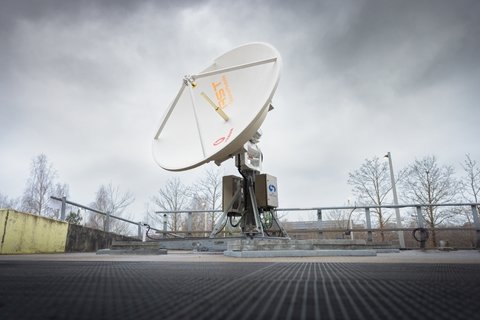
In late January 2025, Vodafone made the world’s first space video call from an area of no coverage using a standard mobile phone and commercial satellites.
To make this possible, our team of engineers had to build a new satellite gateway in a matter of weeks. As the only satellite technology of its kind built to offer a full mobile broadband experience, this was no easy feat.
Dishing up connection
When the team began work in early December, their first task was choosing a location for the temporary satellite gateway.
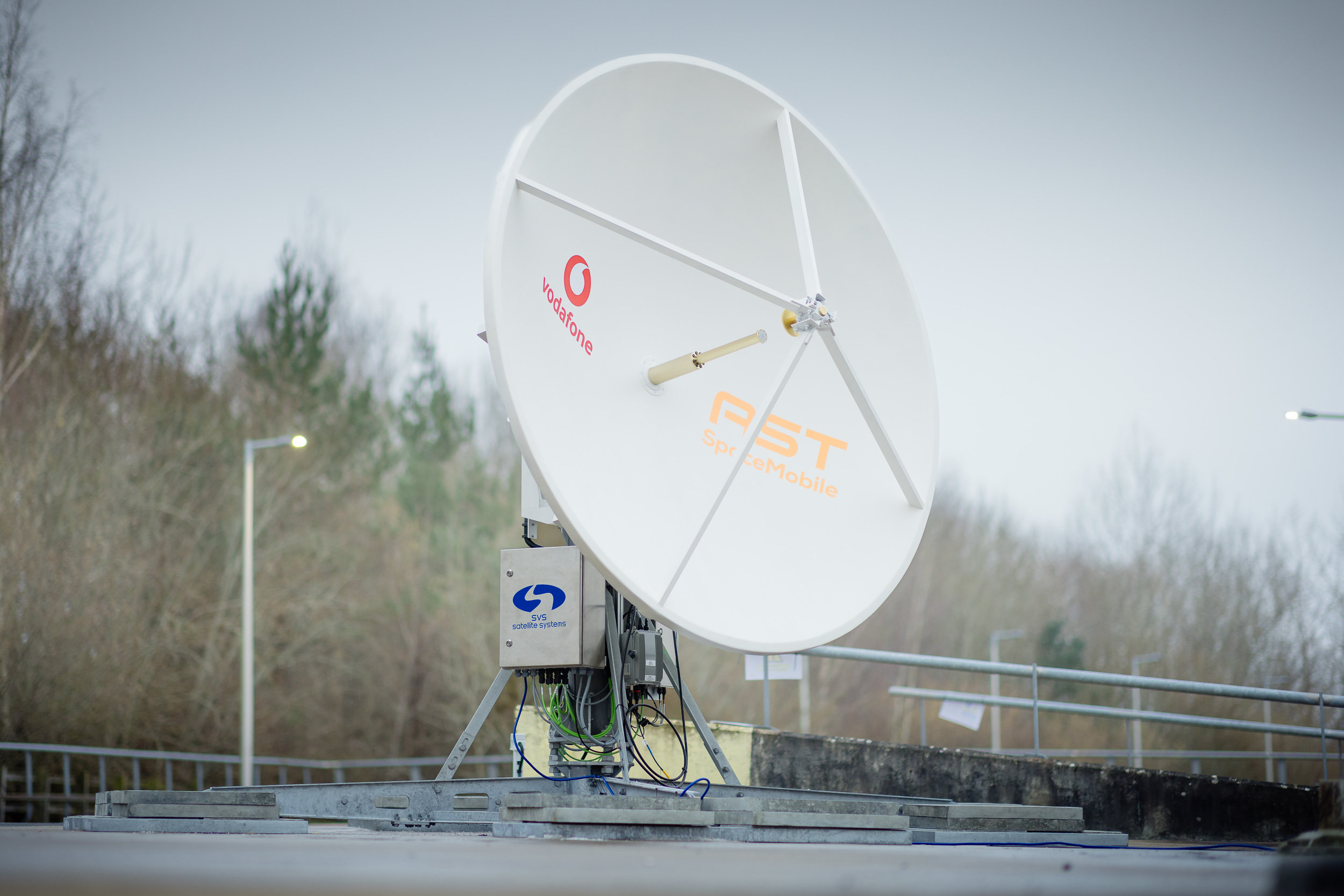
The requirements? Space for the satellite dish, which is 2.4 metres in diameter. Good visibility of the sky in all directions because of the way it moves and tracks the satellite. And finally, a location which could take the weight of the dish, which is about one tonne.
After looking at several locations, one of our car parks at our Newbury office was chosen.
Once the dish and its control system arrived from Europe, which took over a week as the team waited for a plane big enough to become available, it had to be transported to the top deck of the car park.
Ideally done by a crane or forklift, but after some research and with the infrastructure’s height restrictions, it was decided that manpower was the best way forward.
“I think there was ten of us on site doing that assembly,” said Sami Gabriel, Distinguished Engineer at Vodafone. “In the R&D team, we do a lot of trials so it’s a matter of finding a way to make it happen – no is not an acceptable answer.”
Within three days of arrival, the dish was in position and the team connected it to our core network via cables running to an existing on-site base station that had been upgraded with the relevant equipment to support the dish connection.
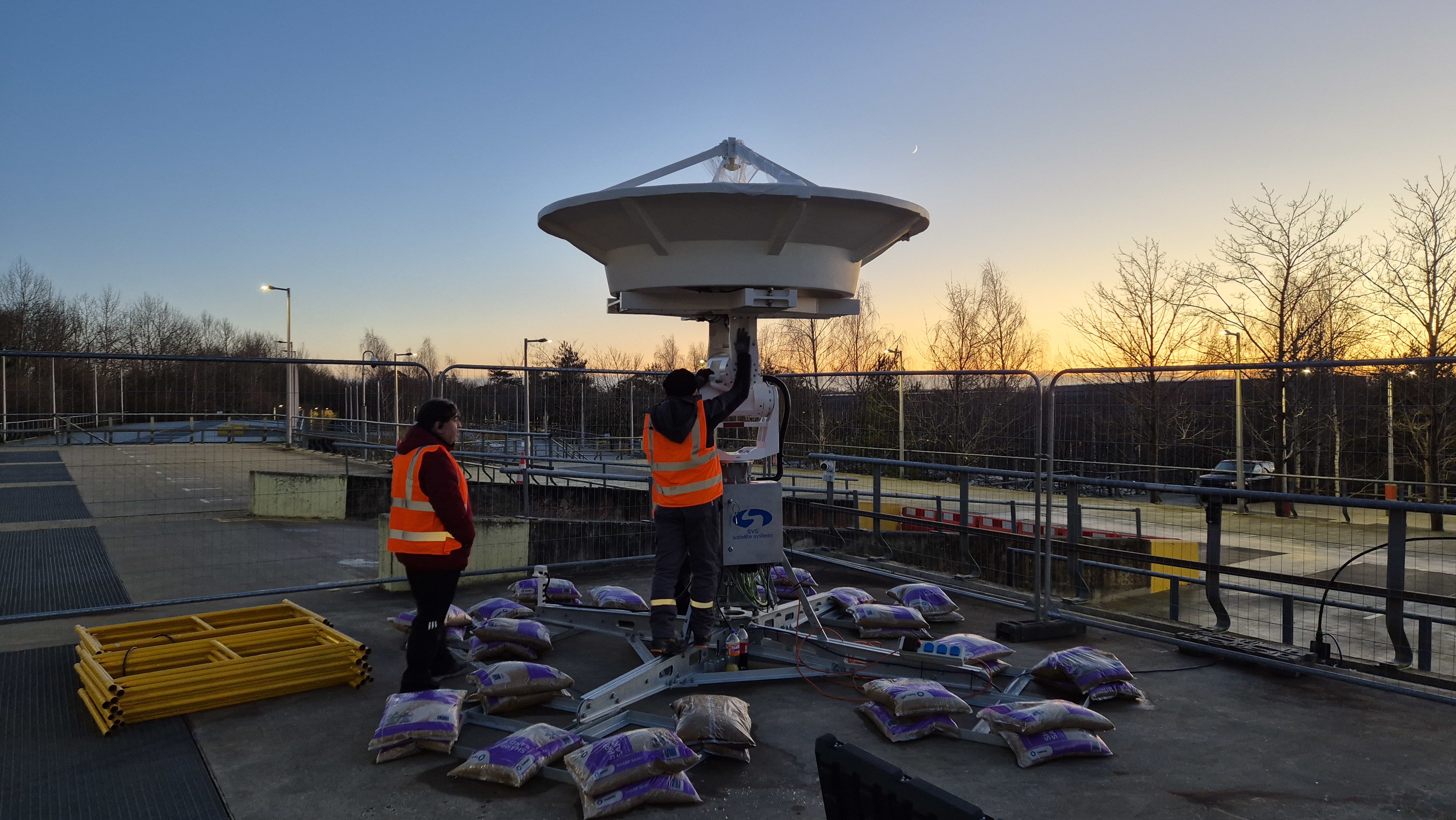
“There’s no power supply beyond the lighting in the car park, so we had to run a dedicated 100-metre power extension from the nearest main supply to the dish,” explains Sami. “It actually worked first time.”
The base station allows the gateway to connect to other communications networks so that once it receives the satellite signal of the incoming call, it can transmit the signal onto the receiving phone.
This is similar to how your phone works now, using a mobile tower, also known as a base station, to send and receive signal to make calls. The difference is the range. A typical mobile tower has a range of 4km, but with trees and buildings in the way, it’s possible to experience a weak signal or struggle to connect when far away from it. In comparison, the satellite is connecting from over 500km away but can maintain a strong signal as its path is unobstructed.
The next step was integrating the AST SpaceMobile kit, which tracks the satellite and tells the dish where to point so they can communicate with each other. This took place around New Year and once the team could coordinate the pointing, they were ready to try some calls.
Spotting a not-spot
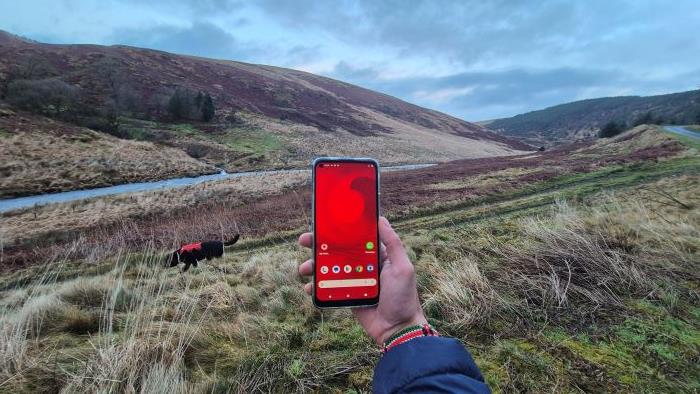
To make a satellite call work, our engineer’s smartphone needed to connect directly to a satellite from an area of no mobile signal, known as a not-spot. Using coverage maps, lead engineer, Rowan Chesmer, was able to work out which remote Welsh valleys might not have coverage.
This meant tackling January weather. From snowy dirt tracks to flooded roads and fallen trees, Rowan, his colleague Abdirahman Farrah and his dog Odin had to face some challenging conditions.
In addition, they had to re-farm some of our spectrum to prevent any interference with our terrestrial networks.
Now it was time to check the most important element – that the phones would connect to the satellite in space.
Using a spectrum analyser, Rowan and Abdi tested for signal from the satellite.
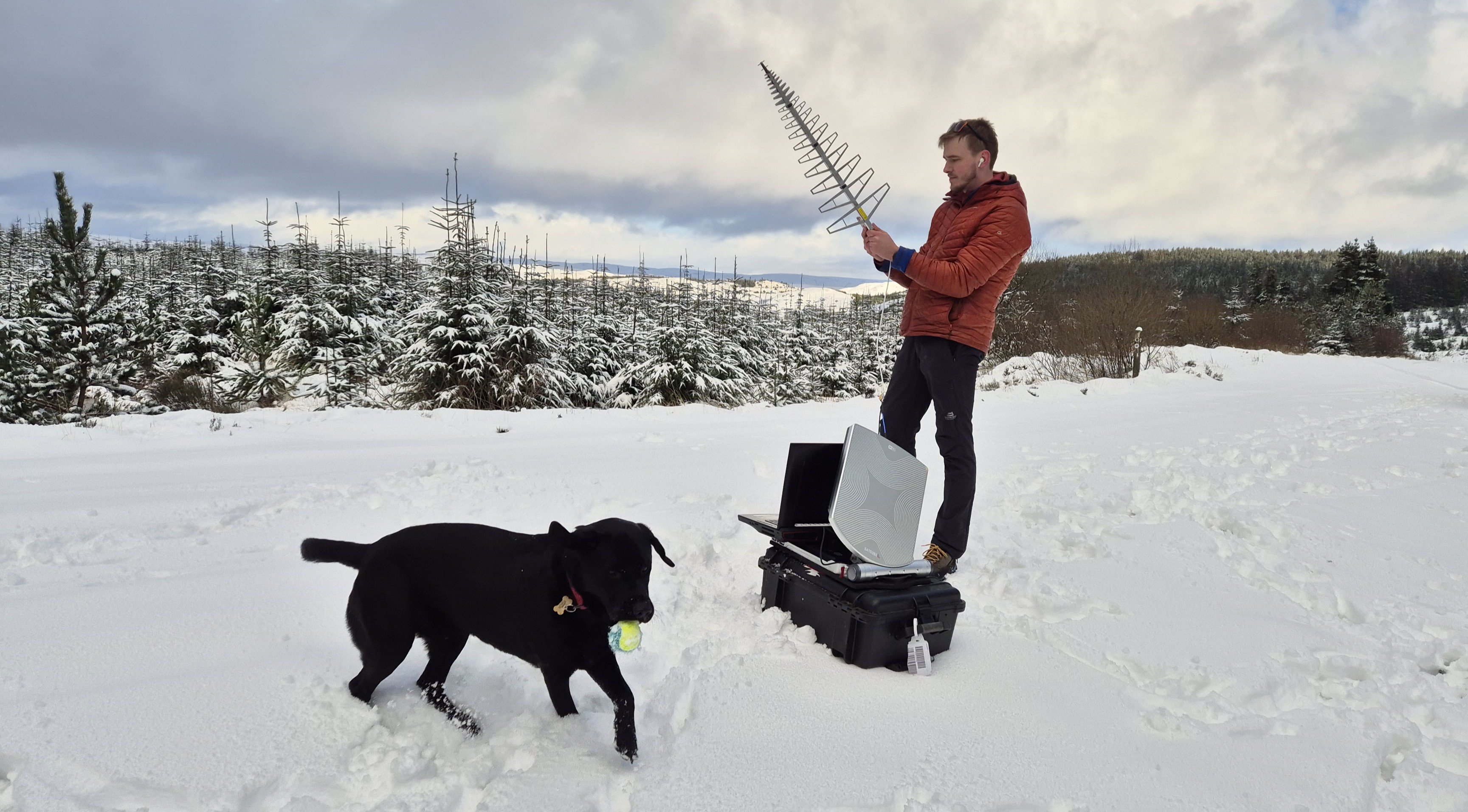
“You can't see anything, but you hold a spectrum analyser up and you can clearly see the signal,” said Rowan. “It looks really boring when you're doing it, but it’s incredibly exciting when there's something there.”
Likewise, back in Newbury Sami describes seeing the satellite network as “euphoria”.
It was down to him and the team ‘back at base’ to coordinate a lot of the communication. While Rowan was testing in the field, Rame Canolli and Yll Bajrami from the R&D team would be in the office all hours checking that the server identified their base station being connected and that they identified a user (Rowan and his phone) trying to connect to the base station.
As we started working with one satellite, the window for connecting was small, as the team would get two or three passes a day. Which is when the satellite is above the local horizon, and therefore, available for communication with a ground station and a mobile phone.
Soon, AST SpaceMobile dedicated the passes from all five of their BlueBird satellites to the project. This meant the team had up to 12 passes, roughly every 10 to 20 minutes across four to five hours. “There was a running bet as to which satellite would make the first call,” laughs Rowan.
This was a demonstration with thin margins, but through sheer grit and determination, the team pulled it off and managed to make a voice call, followed by the video call to our CEO Margherita in the early hours on 29th January 2025 and history was made.
Getting everyone connected
So, when will you be making calls via our new space-based mobile network?
Since the initial call, the temporary gateway has moved from its home in Newbury to a permanent home, in preparation for commercial services planned to launch later in 2026.
Although technically the gateway the team built in Newbury could service the whole of the UK!
The network will have enough satellites to ensure there is always one available to connect to and therefore will always provide 4G and 5G broadband coverage, wherever you are.
Watch this space for more news on Vodafone’s satellite plans.
Want to know more?
Learn about our satellite technology.
Watch the first space-based video call.
Find out more about Rowan Chesmer, our lead engineer.
More stories



Vodafone launches Express Capacity to quickly meet demand for data centre connectivity
3 minute read