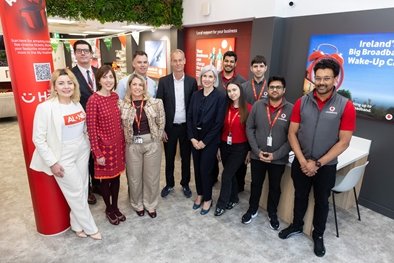
International Women’s Day is an opportunity to celebrate the women who are taking action to make the world a more diverse, equitable and inclusive place.
At Vodafone, we’re committed to helping close the digital divide and continue to drive-up representation of women in the tech industry. This year, we’ve been speaking to some of them about how they are championing change, both through their roles and their inventions.
Click the images below to explore their stories.
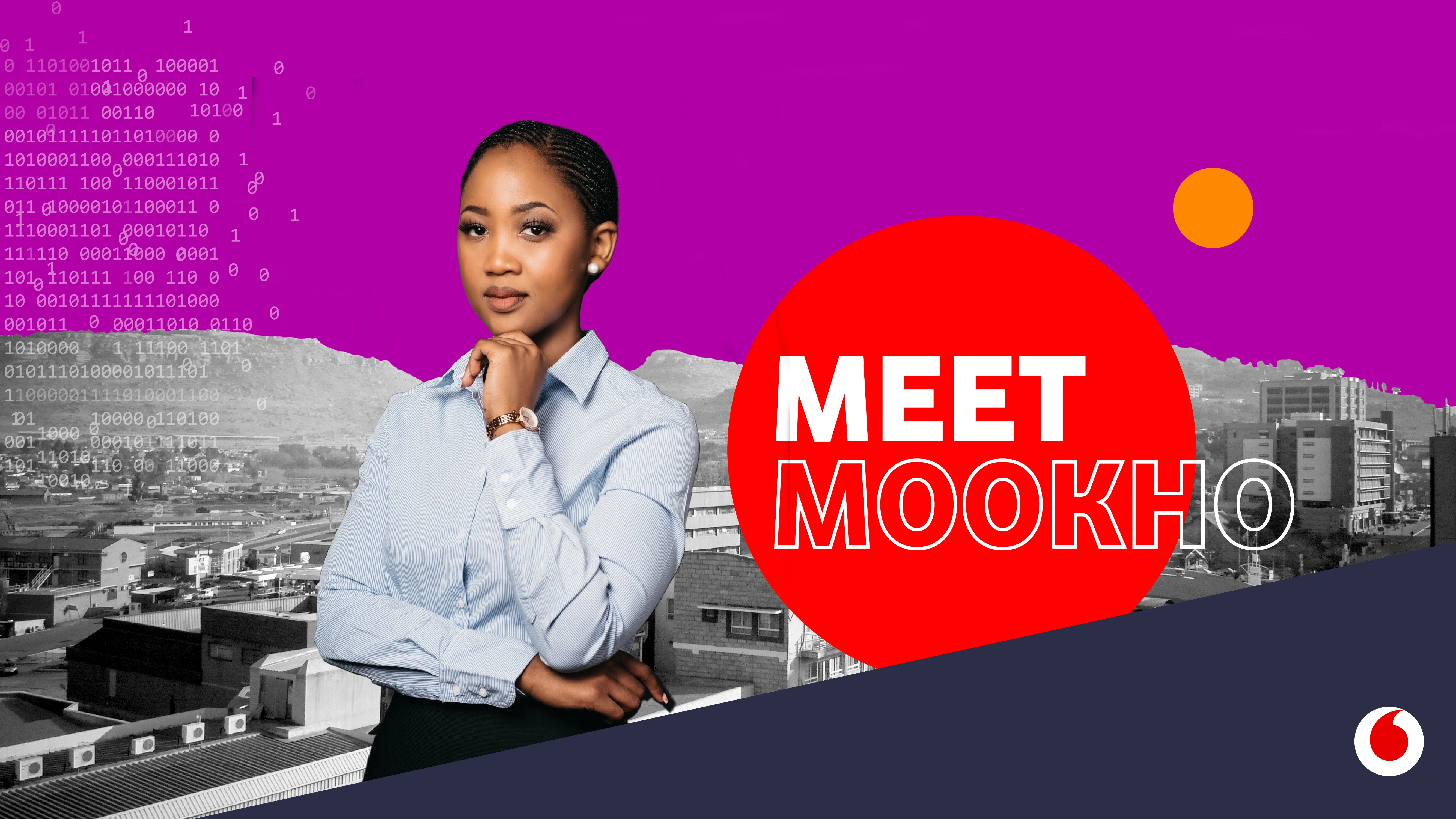
Spending her days fighting cybercrime, Mookho plays a vital part in protecting our customers’ data. Passionate about sharing her knowledge and upskilling others, for International Women’s Day, she tells us about how she’s encouraging more women into the workplace, redefining gender stereotypes in Lesotho.
Mookho Hlaahla didn’t know she wanted to work in cybersecurity. Only that she was good at IT and found it interesting.
After studying information systems at Stellenbosch University in South Africa, she returned to Lesotho to work for Vodacom as an intern before being hired into her current role as a Governance, Risk and Control specialist within the cybersecurity space.
“When I joined as an intern, Vodacom was specifically looking to diversify the team and that alone tells you that there weren't a lot of women within cybersecurity.”
Admitting she felt intimidated initially, she soon adjusted to working in a male dominated industry.
“As a woman, you have certain responsibilities at home”
Mookho goes on to explain that in Lesotho, a woman’s place is still considered to be in the home.
“Society’s expectation is that as a woman, you have certain responsibilities at home. So, if you're not married, then maybe your parents are expecting you to be at home before sunset because you're a woman and you have to do certain chores.”
She realises that because of this, there is an assumption that women won’t be able to fulfil a role in cybersecurity as successfully as their male counterparts.
“As a woman, it is no longer safe for you after dark, so you can't necessarily be as available as the cybersecurity community would expect.”
She adds, “We are monitoring the security of our technology environment and at any given point in time, anything can happen, whether it's during the day or at night, meaning it needs someone that is always available.”
This is just one, damaging assumption which is used to safeguard what has predominantly been a man’s environment for many years.
“I think just being in the technology space alone, there's a lot of men and they just come up with all these reasons why you are not as capable as them and if you disagree with them on a certain work issue, it's because of your hormones. It's because of your menstrual cycle. All these funny things.”
This isn’t so much an issue within her own team, but more in terms of the broader technology landscape. However, it is changing.
“There are opportunities out there and you, as a woman, can also grab them”
Mookho recalls that when she joined the team as an intern, there was only one other woman on the team.
“What I liked about her was that she was so fierce, and she stood up to the men and was so confident. Because of those characteristics, she became the manager. So that was very inspiring because I had never seen a woman in cybersecurity hold a management position,” says Mookho.
“She has now moved onto a new job as a director in another company in Madagascar and so that’s even more inspiring because it shows that if you put your mind to it, there are opportunities out there and you, as a woman, can also grab them.”
Today, the Head of Cyber for Vodacom Group is a woman, Kerissa Varma, and she is also the President for Women in Cybersecurity Southern Africa. Arranging meet ups for women across different businesses, she is creating opportunities for girls to get into technology by inviting local schools along to these events too.
This shows the industry’s transformation already. “You see it in the way the local schools are receiving the invitation. They are excited for it and are allowing the students to participate in the events.”
Mookho also talks about how “Vodacom is putting in a lot of effort to train, not just men, but also women, to give us equal opportunities and to encourage more women to take up space in this area.”
As a Vodacom Cybersecurity Ambassador, she is part of this effort, often educating colleagues about digital skills and going into schools to teach children about internet safety, giving them tips for protecting themselves online.
“We connect for a greater purpose”
Outside of work, Mookho is also part of the Internet Society, working with governments and regulators to promote free and open internet for all.
“Giving back to the community, raising awareness on cybersecurity issues within my workspace is a proud moment,” she says. “At Vodacom, we connect for a greater purpose so we have that obligation to society to also protect them.”
For Mookho, the future is bright and she’s excited for what lies ahead.
“New challenges are exciting. In cybersecurity, you don’t deal with one thing that you've been dealing with the past 10 years. It's constantly changing and challenging you.”
Might a job in Madagascar be on the cards?
“I cannot wait,” she laughs, and with that she’s gone to fight the next iteration of cybercrime.
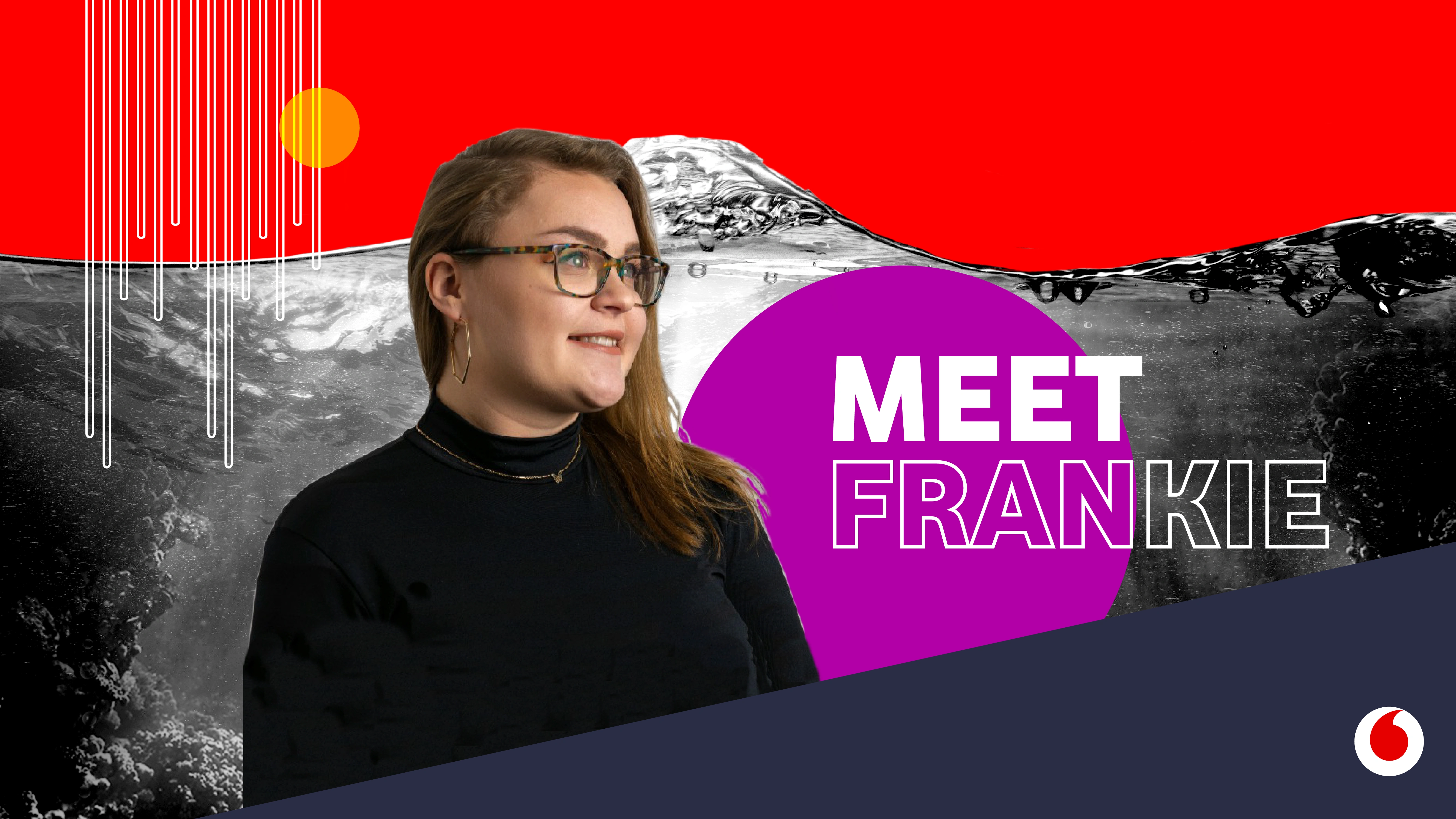
Winning Oxfordshire’s Young Engineer of the Year award in 2017, Frankie is a force to be reckoned with. Creating a lasting impression as a Vodafone graduate, the submarine engineering team created a permanent role for her in the team and the rest is history.
For International Women’s Day, she tells us why she’s thrilled to be working on the largest subsea cable in the world, bringing greater connectivity to communities that have been previously underserved.
What most people don’t realise is that the majority of the world’s internet traffic runs through cables lying on the ocean floor. It’s the job of Frankie and her team to keep them running and she couldn’t be happier about the work they do.
“I always fancied myself as bit of a ‘Scotty’ from Star Trek,” she laughs.
With an interest in maths and physics, as well as engineering, she remembers being in the minority at university.
“Walking into a lecture hall of men can be quite overwhelming”
She recalls how one in 15 of her peers were female.
“Walking into a lecture hall of men can be quite overwhelming, but luckily for me, we had a lot of female lecturers that were really good at their jobs, and they were just such positive role models that I didn’t come across anyone treating us any differently.”
Within the industry she believes there is still room for improvement, but as part of a WhatsApp group with other women in the industry, she’s positive about the impact they can have if they all work together.
Watch her full story:
Working as a Standards Specialist, Chandrika is also making her mark as an engineer, read her story next.
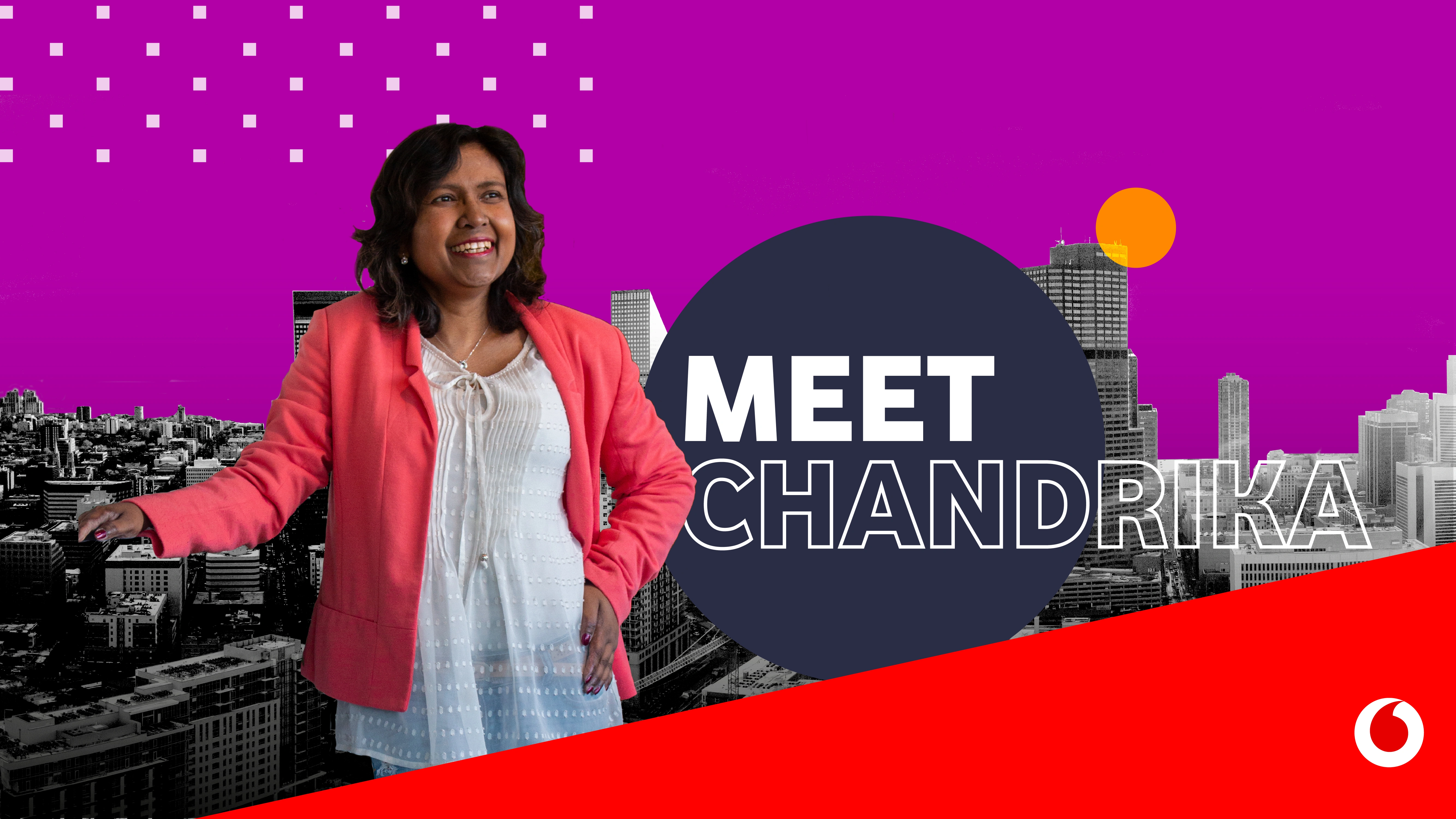
From designing the standards in mobile phones and IoT devices, to exploring the potential of 6G, Chandrika Worrall plays a key role in the future of connectivity. For International Women’s Day, she tells us her story and experiences as a woman in technology.
For Chandrika Worrall, breaking the mould came easy.
One of three when growing up, she explains how there was never any bias in the way her and her sister and brother were treated.
“I guess my mum is quite forward. She wants girls to be vocal and pave their way in the world.”
An energy Chandrika has clearly inherited, given her quiet confidence and ultimate success in the technology industry.
“In my role, I’ve always been in the minority”
Interested in maths at school, Chandrika went on to study engineering, before coming to the UK to do her PhD where she was the only woman in a class of 18 men.
Recalling the first time she went to an industry event 20 years ago; Chandrika tells us how only 5% of the room were female. Nowadays that can be up to a quarter, or even a third of the room, so things are changing.
“To be honest, in my role, I’ve always been in the minority in terms of there being lots more men than women.”
As a wireless communication expert, Chandrika is responsible for many of the ways in which our phones work today.
A Senior Standard Strategist at Vodafone, she spends her days working with chip vendors, mobile manufacturers and network operators, creating the industry standards that every device being designed or produced has to comply with.
Focusing on telecommunications technologies, including radio access, core network and service capabilities, there is an increasing focus on the Internet of Things (IoT), as we move to make devices more connected than ever before.
“I know what I’m capable of, that’s what drives me”
While being in a male dominated environment never bothered Chandrika, she is pleased to see more women coming into technology, with organisations and schools actively encouraging it as a career path. And by being recognised for her work in the industry, she has unknowingly created a roadmap to help these women to succeed.
When it comes to confrontation in the workplace, she simply says, “we need to respect each other’s boundaries, that’s it.”
“I know what I’m capable of, that’s what drives me,” she says confidently, before adding, “in the mobile communication standard groups, I do get the respect.”
Where does this confidence come from?
“I don’t compare myself to others, I never did.”
Instead, Chandrika focuses on her passion to push her own limits and enthusiasm to try new things.
“Technology is and should be used to improve the quality of life for everyone”
“Everything is always changing and I like that,” she says of the industry. “There's thousands of inventions going into one phone, it’s a big industry.”
Currently, Chandrika is looking at how IoT devices can work in variety of applications, from automated warehouses to natural disaster monitoring and smart homes. One area being trialled is how this technology can be used to improve elderly care at home. The impact here could be truly revolutionary and change people’s lives. Giving individuals independence for longer is just one example of how technology can make the world a more equitable place.
Looking to the future, Chandrika and her team are also already working on the next generation of mobile technology, 6G.
“It is kind of like science fiction because everything is going to be connected. All the devices around us – driverless cars, drones – and with satellite connectivity there will be greater coverage everywhere.”
Chandrika’s role is to work with other mobile companies to define the specifications that will enable this new variety of services and to develop Vodafone’s network so that it can fulfil the requirements that are coming.
Ultimately, what drives Chandrika is that she wants to see her designs being used. “Technology is and should be used to improve the quality of life for everyone.”
We couldn’t agree more!
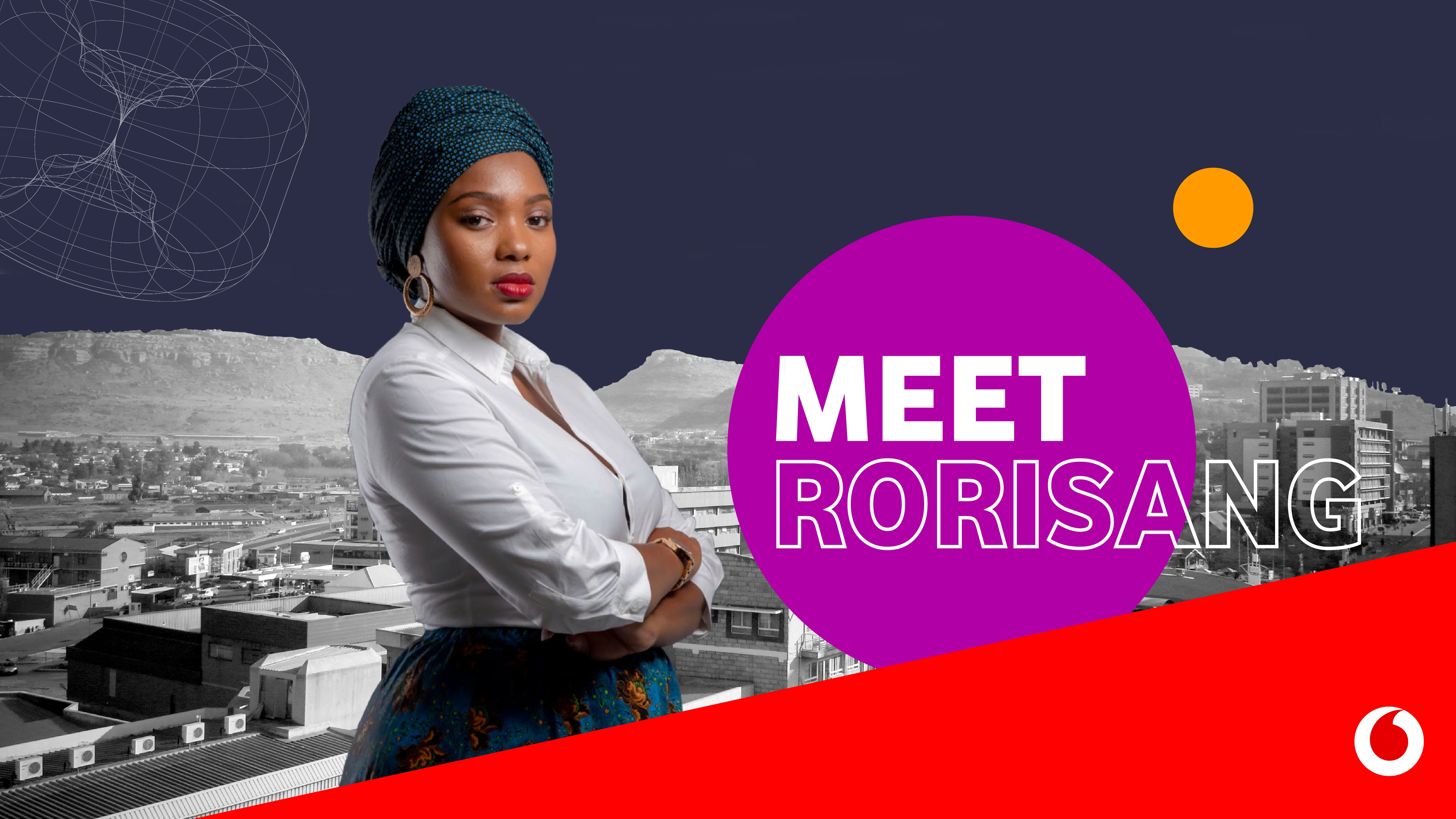
Rorisang Motlomelo is based in Lesotho, where she heads up a team of business analysts and software developers as a Solutions Delivery Manager. It’s a far cry from her beauty queen days. Winning various pageants growing up, including Miss Queen of the Universe back in 2012, she has now turned her hand to creating solutions that will benefit our customers.
For International Women’s Day, she tells us about being judged for her appearance and why she believes it’s important for women to help build other women up.
As a Vodacom Innovation squad member, Rorisang is passionate about bringing new ideas into the organisation and developing solutions that are going to improve lives.
For example, she recently worked with a local female doctor to build a mobile app that offers digital consultancy for doctors, slashing consulting fees in half and bringing the people of Lesotho greater access to healthcare.
Rorisang explains how she had to consider the different languages of each customer, whether they would be able to read, and what device they would be accessing the app on, so that it could be developed with these considerations in mind.
Over time she has realised that her people skills and ability to think like the customer have helped her to perform her role well, but that wasn’t always the case.
“I never thought a girl in heels, a former beauty queen, would have anything to do with technology”
Coming into the industry, Rorisang remembers the prejudice she faced.
“I never thought a girl in heels, a former beauty queen, would have anything to do with technology,” she recalls an old colleague saying to her. She admits this made her feel nervous and, as a result, she began to change how she behaved so that she would fit in.
Fortunately, after some mentoring, Rorisang has since learnt how important it is to be herself.
Now, as a mentor, she enables other women to grow within Vodacom and, outside of work, she trains local, young girls on basic computer literacy so that they too can have a career in technology and build a better future for themselves.
Watch her full story:
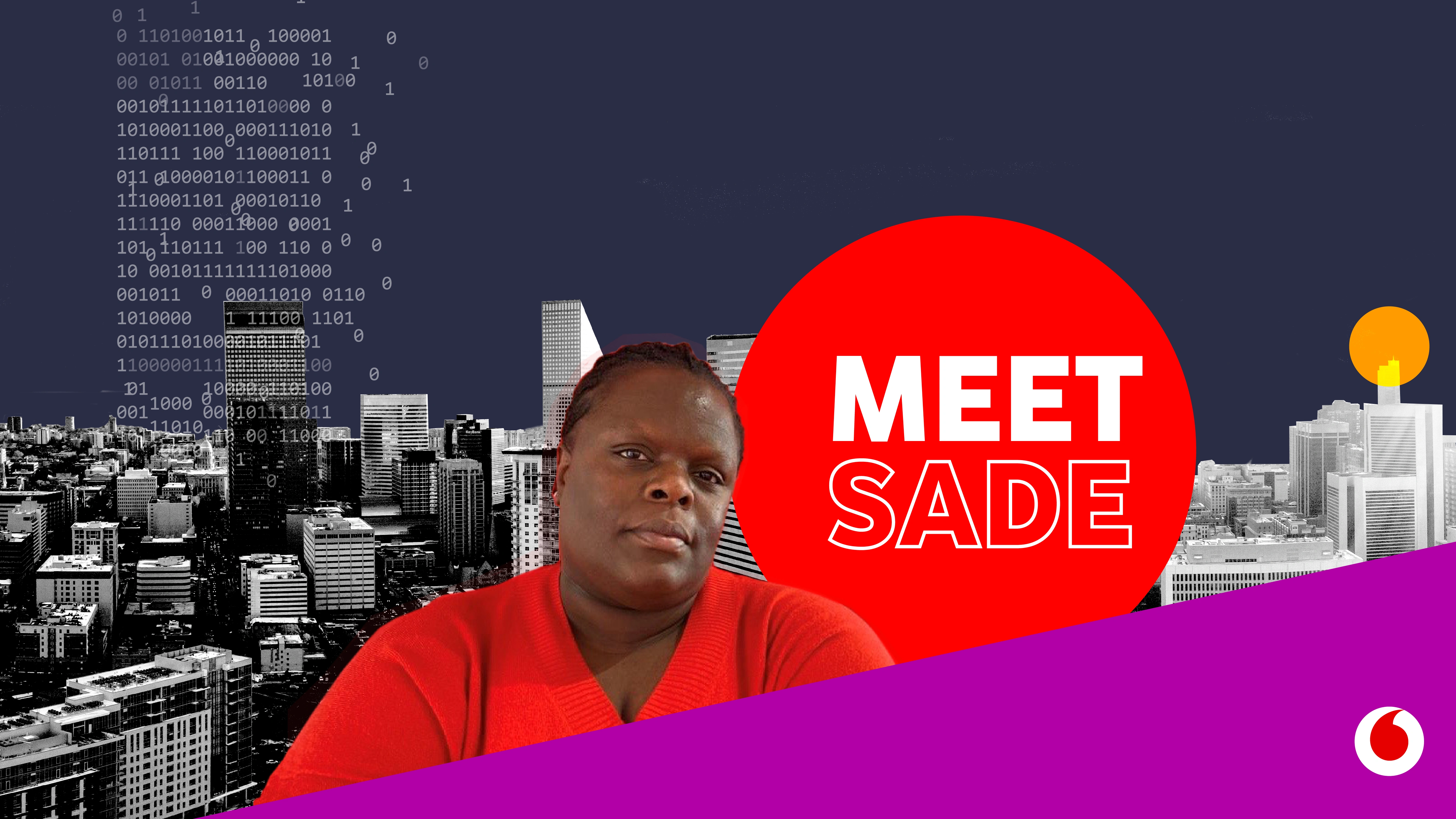
Passionate about seeing more women in senior roles, Sade has founded two support groups within Vodafone to help colleagues grow. For International Women’s Day, she tells us her story, from challenges at college to taking a step back when having children.
Sade Oladugbewo admits she wasn’t always interested in a career in technology. “What drew me to a career in tech was realising I did not have the stomach for seeing blood for a career in medicine,” she laughs, before telling us about her current role.
As a Senior Programme Management Office Manager at Vodafone, Sade spends her days working with IT, digital and product specialists, driving their visions forward and helping them progress in their careers.
“It’s a brilliant role, very rewarding,” says Sade. “There’s so many layers to being in technology. I've been very fortunate to be in an industry that I’m constantly enjoying.”
“In my career I have been one of very few women, but I've never really felt that has stopped me”
Entering the workplace as a graduate, there were more men than women in Sade’s team but she points out, “there was a good cohort of women that were also engineers at that time, so I wasn’t the only one. And although I’ve been one of few women throughout my career, I've never really felt that has stopped me from growing.”
She goes on to say, “I don’t really remember feeling like a minority as a woman in tech. Instead, I was focused on the ground-breaking technologies I was working on.”
However, when we ask Sade about choosing to do BTEC qualification at college, she explains how she was questioned by the head of the department and encouraged to apply for the lower-level course despite being qualified for the higher course.
She recalls how her older sister marched her back into the college, with baby siblings in tow, to demand the teacher put her on the higher-level course. He did so reluctantly, and Sade excelled.
Yet when it came to university, she came up against the same criticism.
“The same head asked me what I was going to study at university. When I said software engineering, he said, ‘oh, that's very hard. You're not going to be able to sustain that.’”
Fortunately, Sade was not put off and knew she could do it.
“It was real challenge,” Sade admits. “But I felt that it was something that would really push my abilities.”
“I think the gender roles are creeping up, but they are not where they could be”
Having been part of the industry for more than 25 years, Sade has seen a lot of change in terms of diversity, but she still feels there is a way to go.
“I think the gender roles are creeping up, but not where they could be. It's at the management level and it's in the leadership. We’re seeing still fewer women in those roles across the technology industry, and I think there are life roles that play into that,” Sade explains.
“As women, we have to take maternity leave if we want children, that’s part of life and there's nothing wrong with it, but it is disruptive to our careers and when we come back to work, we can feel vulnerable which sometimes means a step back in our careers. I definitely did with my daughter, I took a step back as I just wanted stability so that I could enjoy being a parent and enjoy family life.”
She goes on to say, “being at Vodafone has enabled me to do all of those things. Being there for my children, but also trying to sustain a career as well.”
Sade puts some of that down to having strong female role models throughout her career. From her sister to her mentor, she explains how their belief in her really built her up.
“It’s about recognising people's talent rather than just what they look like”
This is part of the reason she founded the Multicultural Inclusion Network and the Vodafone Black Professionals Network for Vodafone employees.
“I felt it was important to create a network where people can just speak to others they relate to beyond their immediate team or department, and share knowledge, without being judged.”
In her own experience, Sade tells us how her own confidence has grown, but also how she’s seen others gain confidence and self-belief.
“It’s about recognising people's talent rather than just what they look like,” says Sade. “Anybody who is qualified to do a job, should be recognised for doing the job well rather being judged for their gender, or ethnicity. If you are the best person for the role, you should get the job.”
She adds, “I was born this way. I'm born female, born with an ethnicity. Should I be held at fault for that?”
For Sade, it’s about making everyone in society feel seen and heard.
“We've got some great senior leaders in the business who are really keen to drive ethnicity and equity for our employees. There's a long way to go for all of these things, but we've started the work and that is really important.”
More stories