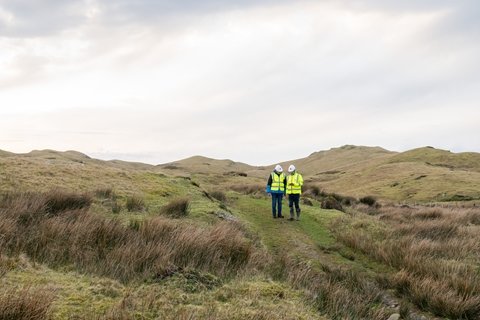
Vodafone Ireland, in partnership with the Office of the Government Chief Information Officer (OGCIO), has successfully tested satellite technology for emergency and public service organisations.
This first-of-its-kind test in Europe demonstrates the potential of using integrated terrestrial networks and low Earth orbit (LEO) direct-to-device broadband satellite connectivity to maintain emergency communications during storms, power outages and in hard-to-reach areas.
Frontline responders
The trial, part of an ongoing collaboration between Vodafone and the OGCIO on mission-critical communications (MCx), included a successful live test call on Clare Island, County Mayo, Ireland. Conducted in partnership with Satellite Connect Europe (the Vodafone and AST SpaceMobile joint venture company), the trial connected to AST SpaceMobile’s satellite constellation, showing how satellite connectivity on a standard smartphone could support voice and data services for frontline responders when traditional coverage is unavailable.
The satellite-enabled MCx call was made by representatives of Vodafone and OGCIO to David Lund, Coordinator of the European Union Critical Communications Service (EUCCS) in the UK. This marks a significant milestone for Ireland, as well as for the evolution of emergency communications across Europe.
Clare Island has played a central role in Vodafone Ireland’s satellite testing programme, including Ireland’s first mobile video call via satellite earlier this year. Its rugged terrain and specular cliffs attract walkers and wildlife enthusiasts making it an ideal real-world environment for testing technologies designed to support tourism, rural communities and critical national infrastructure.
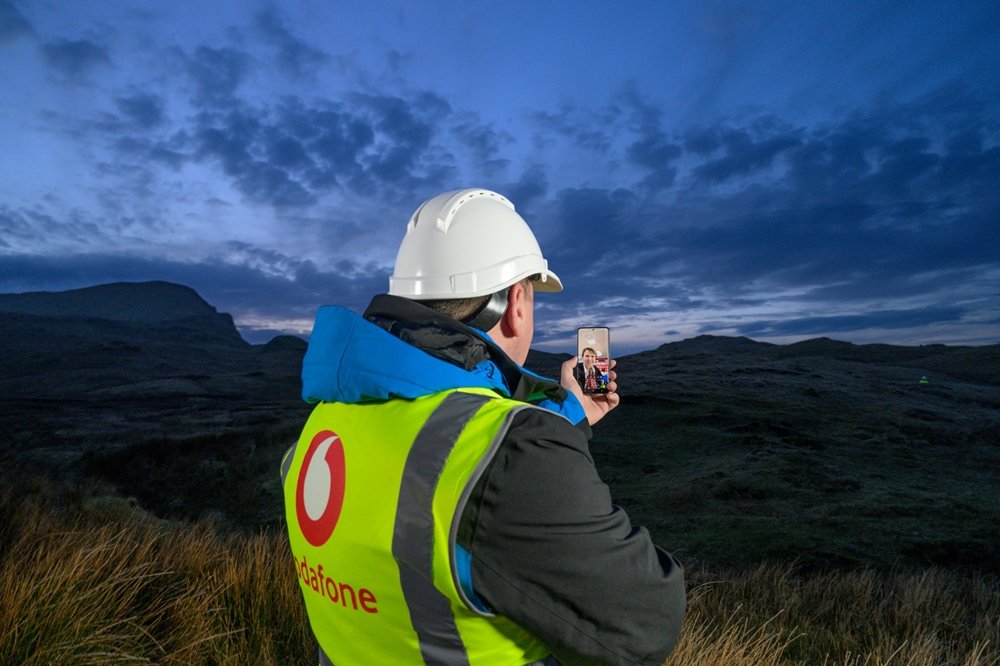 Image: Ireland's first satellite video call made in March 2026
Satellite-enabled emergency calls
The trial showed how satellite connectivity can help maintain communications, supporting access to 999 and 112 emergency services, regardless of mobile provider, as well as blue light organisations such as police, fire and ambulance services. Satellite technology provides an additional layer of connectivity alongside terrestrial networks, helping ensure that the public and emergency responders can stay connected when it matters most.
Sheila Kavanagh, Network Director, Vodafone Ireland, said: “By combining satellite technology with next-generation systems such as MCX, we are strengthening network resilience and helping frontline teams stay connected and respond effectively in remote areas.”
Jim Leahy, Office of the Government Chief Information Officer (OGCIO), added: “Strengthening the resilience of Ireland’s communications infrastructure is a key priority for Government. This collaboration with Vodafone Ireland shows how technologies like satellite can support continuity of service and improve coordination in challenging scenarios.”
Strengthening digital infrastructure
As Vodafone Ireland marks 25 years in the country, it continues to invest in strengthening national digital infrastructure, including a recent €360 million investment in network and digital capabilities. Vodafone Ireland secured the country’s first test and trial licence for direct-to-device satellite technology and is working closely with ComReg on the necessary regulatory frameworks to support the rollout to customers and emergency services.
Want to know more?
Learn more about satellite technology.
How we're helping the emergency services stay connected when it counts.
Supporting mission critical communications with Airbus and RugGear.
More stories

Joint field trial shows how modern mobile networks support live television production
3 minute read