Artificial intelligence is reshaping industries. Satellite networks are extending connectivity beyond traditional boundaries. Quantum computing is moving from theory to reality. Across every corner of technology, change is accelerating.
Yet for all the talk of innovation, the term itself has become increasingly difficult to define.
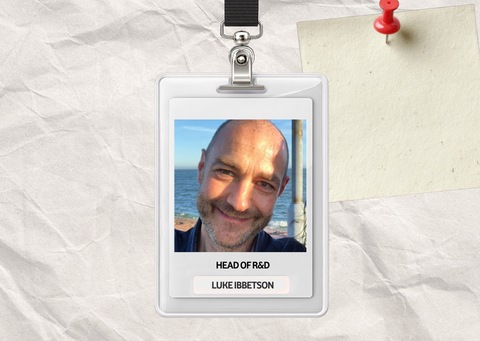
Luke Ibbetson, Head of Group R&D at Vodafone Group, has seen the meaning of the word shift over the years. “Nobody spoke about innovation when I started my career,” he says. But now, the term is arguably overused. “How many times have you heard someone state that their new product, new service or invention isn't somehow "innovative"?”
But true innovation is something more powerful: the ideas, inventions and breakthroughs that deliver fundamental change. "The term captures everything from incremental improvements in a business process through to fundamental technology breakthroughs which change the way we live," says Luke. "I gravitate towards the latter. It's a lot more fun."
It's a perspective established through a career spent identifying and shaping the next generation of technologies that will define the future of connectivity.
But what does this mean for Vodafone and how are we shaping what comes next?
Creating Tomorrow
Today, innovation is often treated as a strategy, a programme or a function. Organisations invest in countless dedicated strategies, programmes and hubs. Yet Luke believes the fundamentals remain unchanged.
It's a principle that has guided Vodafone through three decades of technological transformation, from early mobile networks to today's AI-powered and software-defined infrastructure.
At the heart of our future-looking approach is Vodafone's Group Research & Development team. Luke describes the role as having "an incredible brief" and perhaps most importantly,"a licence to disrupt through advanced technology leadership."
The team's mission extends far beyond evaluating emerging technologies. Their role is to influence how those technologies evolve and how they'll ultimately be used by customers. Today, that work spans some of the most significant technological shifts of our generation.
Current research clusters include artificial intelligence, quantum and quantum-safe technologies, connected mobility for autonomous vehicles, next-generation communications and Vodafone's evolving 6G strategy. The team is also helping pioneer non-terrestrial connectivity through initiatives such as Vodafone's partnership with AST SpaceMobile, enabling direct-to-smartphone satellite communications that could help eliminate connectivity gaps around the world.
Rather than waiting for technologies to mature, the team works with universities, research laboratories, venture-backed companies and industry forums to help shape their development from the outset.
"The team shapes new technology at an industry level through early engagement," Luke explains.
The result is an R&D function that doesn't simply monitor the future. It helps build it.
"I'm super proud to be leading such a world-class team, which has deeply influenced the technology enjoyed by our customers over the last 30 years."
Turning invention into impact
While breakthrough technologies often capture headlines, Luke is quick to point out that invention alone isn't enough. History is full of brilliant ideas that never gained traction. The real challenge lies in transforming technical possibility into practical reality.
"Innovation has little value if it's never deployed," he says.
It's a mindset that shapes how the team evaluates emerging technologies. As Luke puts it: "Let's forget about trials, tests and proof of concepts for a moment, and assume the widget works. What would be the next step, how would it be introduced, what are the barriers to overcome and is it solving a challenge which is worth addressing?"
The breakthrough is not simply proving a technology works, but understanding how it can be applied to solve real problems. Vodafone's recent work with satellite communications for emergency services in Ireland is one example of how innovation moves from technical possibility to practical impact.
This philosophy shifts the conversation from invention to adoption, because ultimately innovation only matters if people use it.
The human factor
While technology may be changing faster than ever, Luke believes the biggest barriers to innovation are often human rather than technical.
Identifying the right idea is “a blend of serendipity and experience,” and then moulding it into something that can create meaningful change comes down to “determination, resilience and perseverance."
That's why innovation requires more than technical expertise, "people, organisations and culture are every bit as important as the technology fundamentals."
His advice for future inventors and innovators is straightforward. "At times you will have to push to the limits. Asking for forgiveness will get you further than seeking permission."
Defining the next decade
Recognising the scale and speed of change underway cannot be ignored. Artificial intelligence is colliding with advanced connectivity. Quantum computing could redefine cybersecurity. Satellite networks are extending coverage beyond traditional infrastructure, while future generations of mobile technology continue to reshape what's possible.
Asked what innovation will mean ten years from now, Luke is honest that nobody can predict the future with certainty. Instead, he says the most important lesson he has learned is the value of remaining agile.
"I've learnt the value of agility," Luke says. In fact, he believes the word innovation itself may become less important.
"Perhaps the term will recede into the background as the power of technology democratises our ability to invent and progress new ideas far more rapidly than in the past."
If that happens, innovation may no longer belong solely to specialist teams, researchers or technologists. It may become something everyone can participate in.
And that might be the most transformative innovation of all.
A boundless future
Ultimately, the future will not be defined by a single breakthrough, but by the collective impact of thousands of inventions brought to life through collaboration, ambition and perseverance. As technologies converge and the pace of change accelerates, Luke, his team and many others across Vodafone are helping ensure we remain at the forefront of what comes next.
Want to know more?
Learn more about our work in quantum computing.
Hear from Luke, as he's joined by IBM, to discuss a quantum-safe future.
Watch as Vodafone makes the world's first space video call.
More stories

Joint field trial shows how modern mobile networks support live television production
3 minute read