


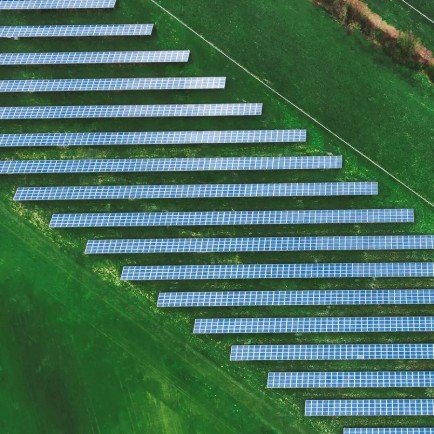
Powering our network requires over 4000 GWh of electricity per year. That's about the same amount of electricity as it takes to power the city of Dublin for a year. We want to use our role as a buyer to demonstrate market demand for renewable electricity and encourage the growth of the renewable energy sector in the regions where we operate.
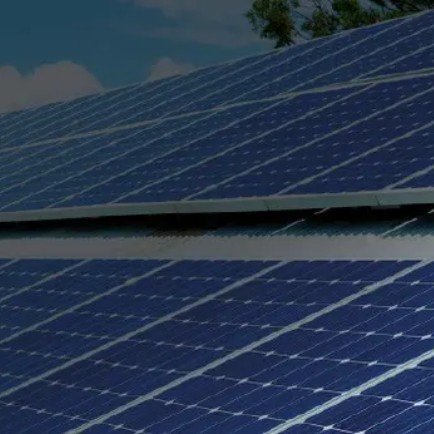
We match 100% of the grid electricity purchased1 and used in our global operations with electricity added to the grid from renewable sources. We achieved this by increasing our use of power purchase agreements (‘PPAs’) and purchasing renewable energy certificates (‘RECs’) in markets where they are available. These agreements and certificates verify that electricity has been added to the power grid by renewable generators, like wind turbines and solar panels. Additionally, Vodafone has successfully engaged with governments and utility providers to establish innovative agreements and market mechanisms like our renewable electricity agreement in Egypt. These groundbreaking electricity arrangements are helping to reveal new ways that companies can support the development of the renewable electricity sector in the emerging markets where we operate.
However, not all countries have market systems set up to offer renewable energy market agreements or certificates to corporate buyers. This is the case in some of the markets where we operate (Albania, DRC, Greece, Lesotho, Mozambique, Romania and Tanzania). In these countries, we match our grid electricity use with renewable generation in grid-connected markets in the same regional power pool. Regional power pools are enabled by grid interconnections, which transcend national borders. By purchasing renewable electricity in neighbouring grid-connected countries, Vodafone demonstrates market demand for renewable energy, which signals to governments and policymakers that companies support the development of the renewable electricity sector in these regions. There is also one location (North Cyprus) where we operate where it is not feasible to match our electricity use with renewable sources, because there is no energy attribute tracking system in place and no grid connection to a market where such a mechanism exists.
1 Correct to zero decimal places. Less than 0.2% of electricity we use is not matched with renewable sources because credible renewable electricity purchasing mechanisms are currently unavailable in the locations where this electricity is used and these locations are not grid-connected to any markets where such mechanisms are available.