



A year ago, we spoke to Nadia Benabdallah, our Group Director of Network Strategy and Engineering, to explore technologies including 5G Standalone, OpenRAN and automation.
Since then, digital transformation has continued to accelerate demand on networks. AI, cloud computing, IoT and immersive experiences are contributing to growing data traffic, as customers, governments and businesses increasingly look for seamless, intelligent connectivity that can adapt to their needs.
To help us understand how the network is evolving to meet these demands, and ones of the future, we’ve spent some more time with Nadia to look at how networks are changing for an AI-driven world and what the next generation of connectivity will look like in practice.
Hi Nadia, what’s your vision for Vodafone’s network as we approach the end of 2026?
We are moving from a world where networks connected people and devices to one where they connect intelligence. By seamlessly bringing together fibre, mobile, cloud, edge and satellite, these networks will help information move, be processed and put to use instantly. That shift is redefining what connectivity means and shaping every aspect of our strategy, from 5G Standalone and Open RAN to Autonomous Networks.
First, 5G standalone is not just introducing network slicing but also improving our uplink performance and capacity. As AI becomes embedded in everyday applications, connected devices and digital services, network traffic patterns will fundamentally change. In the future, networks will support not only human interactions, but also AI agents exchanging information and acting in real time. This shift will also enable greater personalisation. Intelligent agents across the network and IT systems will enable a new level of service personalisation, which will use network slicing capabilities to deliver tailored products and experiences for both consumer and enterprise customers.
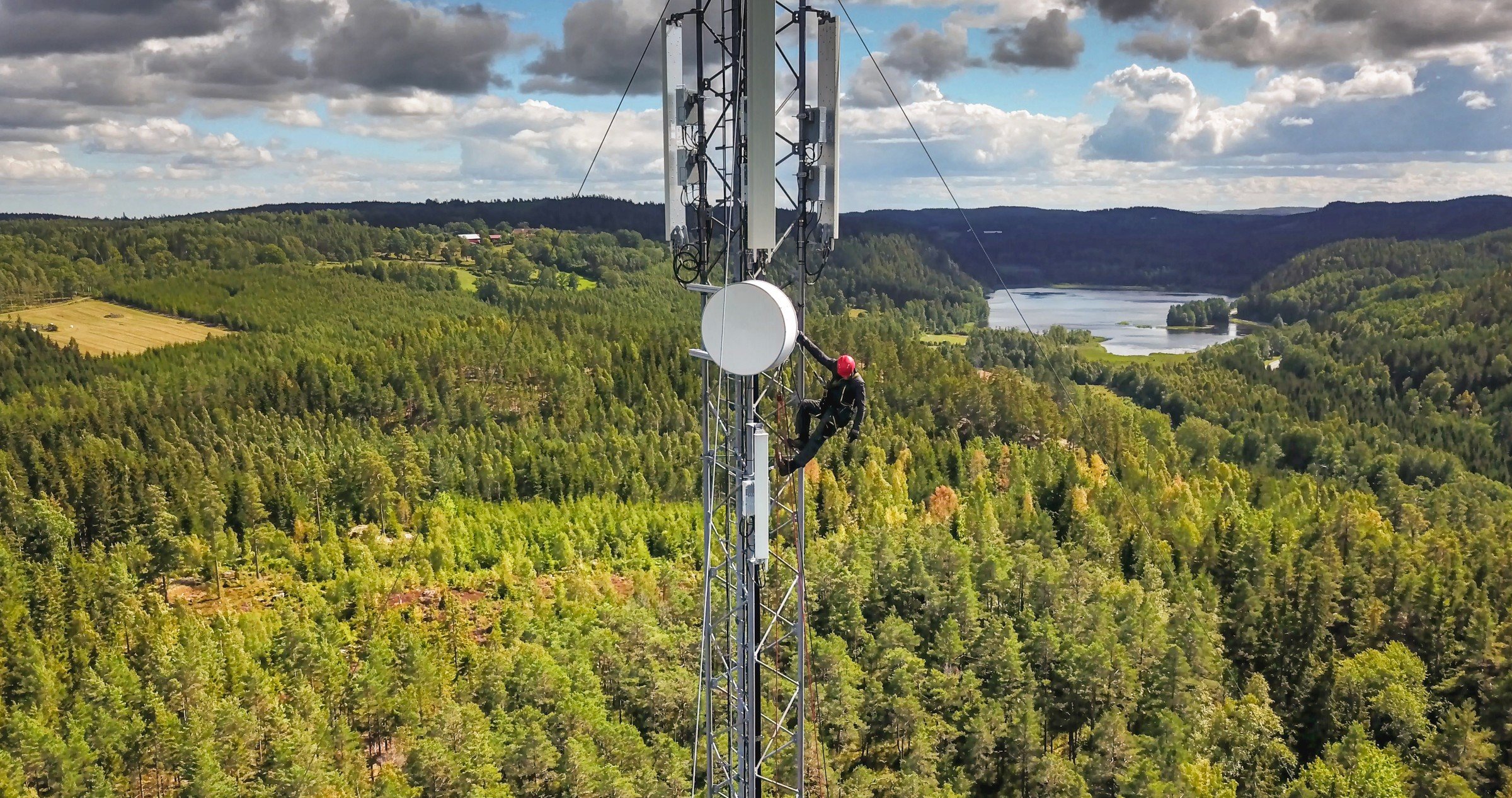
Open RAN has progressed in line with our industrialisation plans, giving us a strong foundation as the industry turns its focus to AI-RAN, which uses AI to make these networks more intelligent and improve performance and operations. Our leadership in Open RAN across Europe puts us in a strong position to help shape the evolution of both 5G and future 6G architectures. At the same time, it is helping transform the network into a simpler, more programmable platform that accelerates automation, enables deeper integration across network functions and lays the foundations for a more unified and intelligent architecture.
Automation has been a major focus for the network team. We have defined an industry-recognised blueprint for our Autonomous Network architecture and are launching an ambitious programme. We have already seen benefits across several domains, including assurance, fault management, and optimization, particularly in RAN and Energy processes. More importantly, this is not simply about automation. It is about creating networks that can increasingly learn and make decisions in real time, while maintaining the trust, resilience and reliability expected from critical infrastructure.
Automation has been a major focus for the network team. We have defined an industry-recognised blueprint for our Autonomous Network architecture and are now launching an ambitious programme. We have already achieved benefits across several domains, including Assurance, Fault Management and optimisation, particularly in RAN and Energy processes. More importantly, this is not simply about automation. It is about creating networks that can increasingly learn and make decisions in real time, while maintaining the trust, resilience and reliability expected from critical infrastructure.
What puts network resilience under the greatest pressure today?
Network resilience is no longer simply an engineering challenge. It is becoming essential to the way society and the economy function. Connectivity now underpins how people work, learn, communicate, access healthcare and interact with essential services.
As our dependence on digital services grows, so does the impact of network disruption. The question is no longer simply whether a network can withstand disruption. It is whether society can continue functioning when disruption occurs.
At the same time, networks are becoming more complex. Cloud-native architectures, distributed computing, growing cybersecurity threats and the rise of AI-driven applications are creating new demands on infrastructure. As economies become increasingly digital and AI-enabled, resilience is becoming an increasingly important strategic capability, alongside its role as a technical requirement.
The future of resilience is not recovery. It is anticipation. It is building networks that can identify issues, adapt to changing conditions and resolve risks before customers are even aware they exist. That is why we’re investing in AI-driven observability, predictive operations and autonomous capabilities that help us move from reactive operations towards proactive resilience.
What’s the difference between AI-ready and autonomous networks?
AI-ready networks and autonomous networks are closely connected, but they address different challenges. An AI-ready network provides the foundation, bringing together trusted data, modern platforms and cloud-native architecture to support AI securely and at scale. These networks are designed to support changing AI driven traffic patterns, such as increased uplink demand, while continuously evolving to enable new AI driven services, such as live translation. Autonomous networks build on those foundations by applying intelligence and automation to how networks are planned, built, operated and evolved.
AI-ready networks and autonomous networks are closely connected, but they address different challenges. An AI-ready network provides the foundation, bringing together trusted data, modern platforms and cloud-native architecture to support AI securely and at scale.
The goal is not simply to automate more activities, but to create a network that can understand what is happening, anticipate what may happen next, and take the right action in real time. For example, a future network could combine real-time information about traffic conditions, major events, or changing population flows with network intelligence to proactively optimise capacity and performance before the demand exists.
As networks become more autonomous, it is just as important that their decisions are safe, reliable and trustworthy. This is critical in telecommunications, given networks support millions of people, businesses and essential services every day. Intelligence only creates value when it can be trusted. For customers, this means more reliable services, faster innovation and better overall experience. For Vodafone, it means building a more resilient, efficient and intelligent network that can continuously learn and improve.
Our ambition is an experience where the complexity of the network becomes invisible and connectivity continuously adapts to customers’ needs.
How will AI and automation enable a more responsive and personalised customer experiences?
We are already using AI and automation across our network operations to improve both customer experience and network performance. AI helps us identify patterns across vast volumes of network data, anticipate potential issues and respond faster and more effectively.
For example, a major event or a crowded transport hub can create a sudden spike in demand. AI can detect these changes in real time and help optimise network resources before customers experience any degradation in service.
This marks a shift from delivering connectivity to orchestrating experiences. As networks become increasingly intelligent, they will be able to understand context and adapt their response accordingly. A motorway, a stadium, a business district or a major event may each require a different network response. Automation reduces complexity, accelerates decision-making and allows our experts to focus on innovation and higher-value activities.
What makes Vodafone distinctive is our scale. Operating across multiple European and African markets allows us to build capabilities once, learn from deployment at scale and rapidly extend successful innovations across our footprint. That scale also creates something increasingly valuable, a diverse set of real-world network experiences from which our systems can learn.
In many ways, our networks are evolving from operating systems into learning systems. Today, networks largely operate based on predefined rules and optimisation models. Tomorrow, they will learn from outcomes.
What role will our network play in enabling growth and digital transformation across society?
Our vision is to build a leading autonomous network and, in doing so, help create the intelligent digital infrastructure that the next generation of society and industry will depend on. The networks of the future will do far more than connect people and devices. They will bring together fibre, mobile, cloud, edge and satellite capabilities into a seamless connectivity fabric capable of supporting increasingly digital and AI-driven economies.
At Vodafone, we see the network evolving from a connectivity platform into a strategic enabler of growth, innovation and resilience. As AI becomes embedded across industries and societies, networks will play an increasingly important role in coordinating data, compute and intelligence in real time.
Our ambition is not simply to operate better networks. It is to help build an intelligent digital foundation on which competitiveness and prosperity will depend.
Want to know more?
Explore how we're evolving our network, building in greater intelligence.
More stories



Vodafone launches Express Capacity to quickly meet demand for data centre connectivity
3 minute read